



Tel:
+86 15680081222
For private EMS centers, rescue stations, commercial emergency fleets, and overseas ambulance manufacturers, choosing an advanced life support ambulance is not only about selecting a vehicle model. The real decision is whether the ambulance can support fast patient access, medical staff workflow, oxygen supply, power systems, monitoring equipment, emergency safety, and long-term customization.
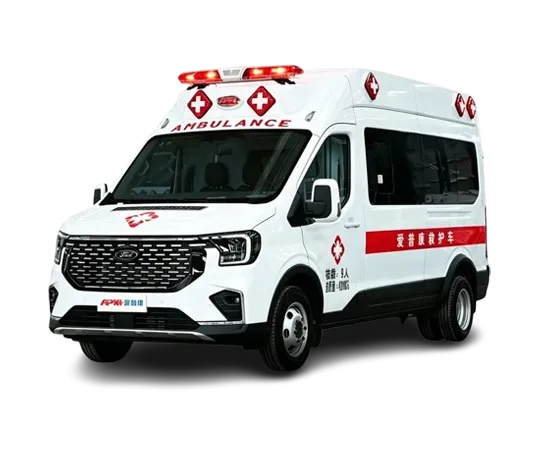
The ALS Ford Transit V363 series from APK is designed for advanced life support transport, where patients may need more than basic transportation during emergency response. For buyers comparing a v363 transit platform, the key value lies in cabin layout, equipment integration, driving configuration, and the ability to customize the vehicle for different service models.
As a manufacturer and modifier of special-purpose vehicles, APK can customize internal layouts, functional configurations, and exterior designs according to different project requirements. This makes APK a practical partner for private emergency operators, rescue stations, fleet buyers, and overseas ambulance builders that need a project-based solution rather than a fixed vehicle package.
An ALS Ford Transit V363 ambulance is used for emergency medical transport scenarios where patients may require advanced monitoring, oxygen support, airway management, defibrillation preparation, infusion support, and medical intervention during transfer.
Compared with a basic life support ambulance, an ALS ambulance is designed for higher-level emergency care. It may be used by private EMS teams, rescue service providers, industrial emergency response teams, event medical support operators, airport rescue units, or commercial medical transport fleets. For overseas ambulance manufacturers, it can also serve as a configurable platform for localized ambulance conversion.
The v363 transit platform is suitable for buyers who need a balance between cabin space, driving performance, medical equipment capacity, and customization flexibility. Depending on the project, the vehicle may be configured for city emergency response, inter-facility transfer, rescue station deployment, commercial EMS fleet use, or downstream manufacturing.
For global buyers, the most important question is not simply whether a transit v 363 ambulance is available. The better question is whether the vehicle can be planned around the real working process of medical staff and the final operating environment.
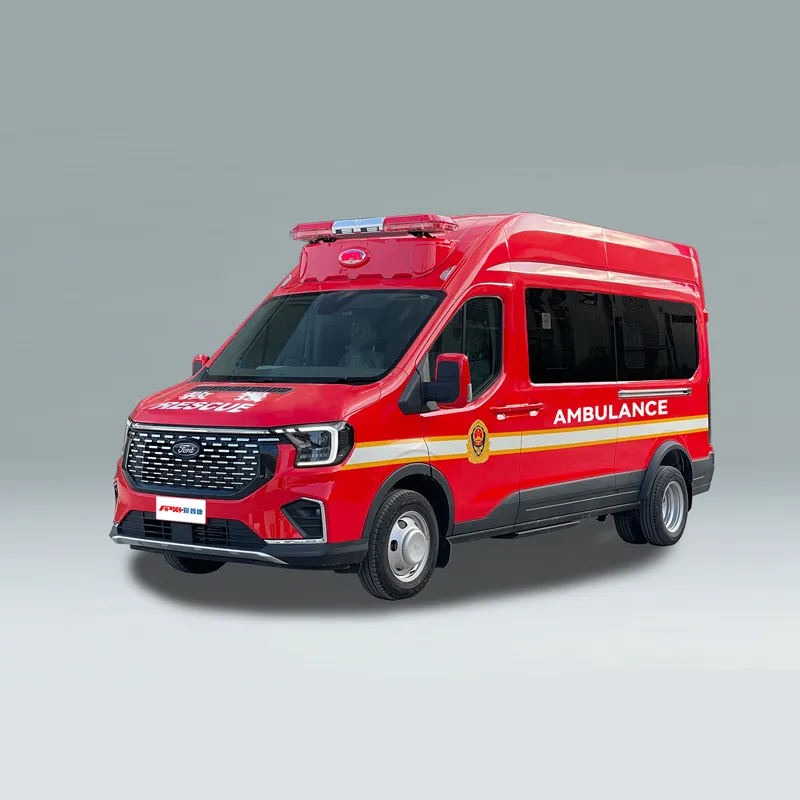
Global buyers choose the v363 transit platform because it can support medical cabin planning, advanced equipment installation, and different configuration levels for emergency transport projects.
For ambulance projects, the base vehicle must provide enough room for patient care, equipment storage, staff seating, and safe movement. The Ford Transit V363 ambulance series gives buyers a practical platform for ALS-level conversion, especially when the project requires a more complete medical configuration than a standard patient transfer vehicle.
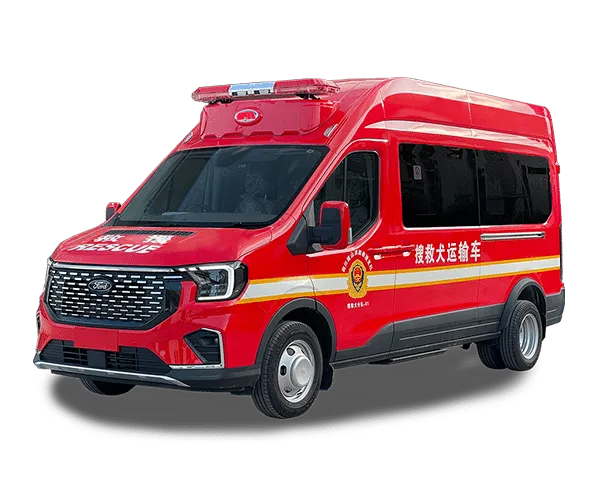
Some buyers may need a 4WD configuration for complex road conditions or rescue station use. Others may prefer automatic transmission for easier fleet operation, or LHD/RHD options for different regional markets. For private EMS and overseas builders, these vehicle-level choices directly affect usability, driver training, maintenance planning, and local market suitability.
A strong ford v 363 ambulance project should consider:
· Medical cabin size and working space
· Steering side requirements for the target market
· Transmission choice and driver usability
· Passenger capacity and medical staff seating
· Oxygen system and medical equipment placement
· Power supply and battery support
· Emergency lighting and exterior visibility
· Local compliance and registration requirements
The right platform should help the buyer build a working ambulance, not just a vehicle that looks like one.
An ALS ambulance cabin should be planned as a mobile treatment workspace where patient access, equipment reach, oxygen delivery, power supply, and staff movement work together.
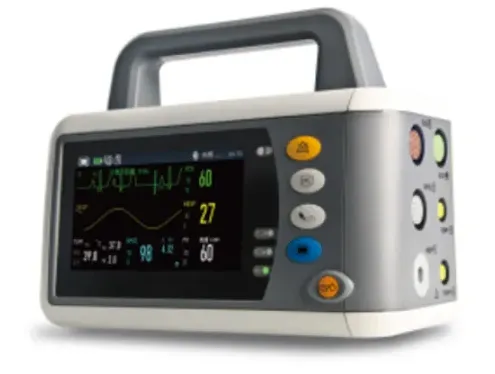
In real emergency transport, medical staff may need to access a monitor, defibrillator, ventilator, suction device, infusion equipment, oxygen system, medicine cabinet, and communication devices while the vehicle is moving. If the cabin layout is poorly planned, the team may waste time reaching equipment or adjusting position during patient care.
For this reason, ALS cabin planning should start from workflow. Buyers should define where the stretcher will be locked, where the caregiver will sit, which devices must be within reach, and how medical supplies will be stored. The cabin should also allow staff to move safely and clean the interior efficiently after each mission.
Key planning points include:
· Stretcher loading route and locking position
· Medical staff seating and working distance
· Oxygen cylinder cabinet and pipeline layout
· Monitor, ventilator, suction device, and defibrillator placement
· AC/DC sockets and inverter requirements
· Auxiliary battery and power management
· Medical storage cabinets and classified storage
· Cabin lighting, handrails, and ventilation
· Easy-to-clean wall, floor, and cabinet materials
For buyers comparing als ford ambulance options, these cabin details are often more important than only comparing the base vehicle specification. A good ALS ambulance must support real medical work inside a limited space.
APK customizes ALS ambulance projects by adjusting the interior layout, functional configuration, medical equipment arrangement, and exterior design according to the buyer’s application scenario.
Different buyers need different ambulance configurations. A private EMS fleet may focus on response efficiency and standardized operation. A rescue station may need stronger road adaptability and clearer emergency visibility. An overseas ambulance manufacturer may need a repeatable base layout that can be localized later for different markets.
APK can support customization in several areas:
· Interior medical cabin layout
· Seating and stretcher arrangement
· Oxygen supply system planning
· Medical equipment installation points
· Power sockets, inverter, and auxiliary power system
· Storage cabinet structure
· Emergency lights and siren system
· Exterior color, graphics, and fleet branding
· Reserved interfaces for locally installed devices
· Different configuration levels for different project budgets
This flexibility is especially important for overseas vehicle builders. Instead of buying a fixed ambulance and modifying it again after delivery, buyers can work with APK to plan the configuration before production. This helps reduce rework, improve installation efficiency, and make the vehicle more suitable for the target market.
For buyers who need a custom transit v 363 ambulance solution, APK can help match the vehicle configuration with private EMS use, rescue station deployment, commercial emergency transport, or local ambulance manufacturing requirements.
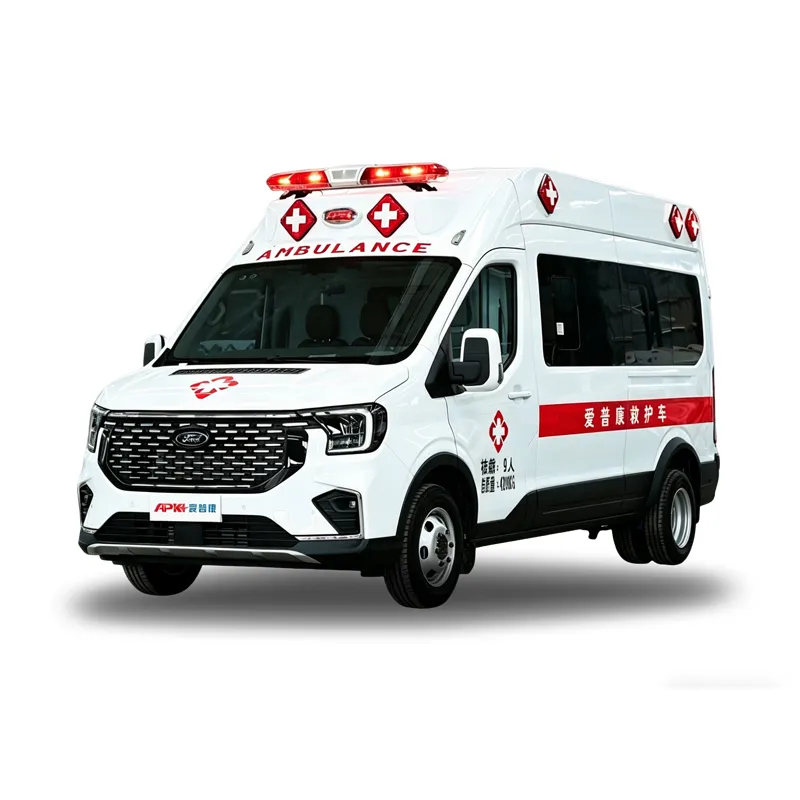
Before ordering a transit v 363 ambulance, buyers should confirm the target application, medical equipment list, cabin layout, steering type, drivetrain needs, exterior design, and local compliance requirements.
Ambulance requirements vary by country and project type. Some markets may have different rules for emergency lighting, siren use, road registration, patient compartment layout, emissions, medical equipment installation, or import documentation. Because of this, buyers should avoid treating the ambulance as a generic vehicle purchase.
Before requesting a quote, prepare the following information:
· Target use: private EMS, rescue station, ALS transport, industrial emergency response, event medical support, or local ambulance manufacturing
· Required steering type: LHD or RHD
· Preferred transmission: manual or automatic
· Road condition needs: standard road use or 4WD rescue operation
· Seating and stretcher arrangement
· Medical equipment list and installation priority
· Oxygen supply and power system requirements
· Warning lights, siren, and exterior marking preferences
· Local compliance or registration references
· Estimated order quantity and delivery schedule
This preparation allows APK to recommend a more accurate ford v 363 ambulance configuration. It also helps buyers compare quotations more fairly, because ambulance cost depends heavily on equipment, cabin layout, power system, exterior design, and customization depth.
A practical ALS Ford Transit V363 ambulance solution should combine a suitable vehicle platform, efficient medical cabin layout, advanced equipment integration, reliable power and oxygen systems, and customization support for real operating scenarios.
For private EMS centers, rescue stations, commercial emergency fleets, and overseas ambulance builders, the value of a v363 transit ambulance is not only in the base vehicle. Its real value comes from how well the ambulance supports patient care, staff workflow, equipment access, road conditions, and local market requirements.
With experience in special-purpose vehicle manufacturing and modification, APK can help buyers develop a customized Ford Transit V363 ALS ambulance configuration. If you are planning an ALS ambulance project for private emergency service, rescue operations, or local ambulance production, contact APK to discuss your layout, equipment list, exterior design, and quotation requirements.
Yes. APK can customize the internal layout, functional configuration, exterior design, and medical equipment arrangement according to different project requirements.
It is suitable for private EMS centers, rescue stations, commercial emergency fleets, industrial emergency teams, event medical support providers, and overseas ambulance manufacturers.
Some configurations support LHD/RHD options. Buyers should confirm the target market and steering requirement before requesting a quotation.
Not always. 4WD is more useful for rescue stations, difficult road conditions, remote service areas, or projects that need stronger driving adaptability. For city EMS fleets, a standard drivetrain may be sufficient depending on local use.
The quotation depends on the base vehicle, steering type, drivetrain, transmission, medical cabin layout, oxygen system, electrical system, medical equipment, exterior design, order quantity, and customization complexity.
Buyers should prepare the target application, market destination, steering type, cabin layout preference, equipment list, oxygen and power requirements, exterior design, and estimated order quantity before contacting APK.