



Tel:
+86 15680081222
Hospitals, private emergency medical services, and government health authorities are facing growing pressure to modernize their vehicle fleets. Rising fuel costs, tightening urban emission regulations, and public expectations around sustainability are pushing fleet managers to look beyond traditional diesel-powered ambulances.
Electric ambulances are one response to these pressures. While the technology is not brand new, the range, reliability, and total cost of ownership of EV ambulances have improved enough in recent years that procurement teams are beginning to consider them as practical, deployable options — not just concept vehicles.
This article explains what electric ambulances are, how they work in real-world emergency settings, and what fleet buyers should consider when evaluating an electric ambulance for their operations.
An electric ambulance is a medical transport vehicle powered entirely by an electric powertrain — battery packs and electric motors — rather than an internal combustion engine. Like conventional ambulances, an EV ambulance carries onboard medical equipment, patient monitoring systems, and life-support devices. The difference lies in how the vehicle moves and how it supplies power to the cabin.
All-electric ambulances draw energy from a high-voltage battery system. This powers both the drive motor and the auxiliary systems inside the patient compartment, including lighting, climate control, suction units, defibrillators, and ventilators. A well-designed electric ambulance integrates the vehicle's power system with the medical equipment load so that emergency functions remain operational throughout a mission without relying on a separate generator or idling engine.
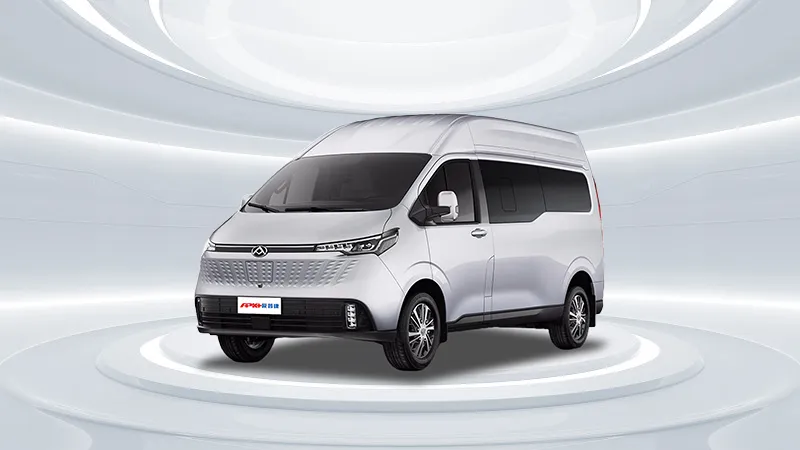
APK Vehicle offers electric ambulances based on platforms such as the Geely Farizon Super VAN, with customization options that allow buyers to configure the medical interior, battery specifications, and onboard equipment to match regional standards and operational requirements.
Zero tailpipe emissions are the headline benefit, but fleet managers pay attention to several other practical features.
Quiet operation. Without an engine running, cabin noise drops substantially. This matters in two ways. First, paramedics can communicate more clearly with each other and with patients during transport. Second, urban residents and hospital neighbors experience less noise disturbance — a real consideration for fleets operating in dense city centers and residential areas at night.
Lower energy and maintenance costs. Electricity costs per kilometer are typically lower than diesel equivalents, and electric powertrains have far fewer moving parts — no oil changes, fewer brake replacements due to regenerative braking, and simplified drivetrain maintenance. Over a vehicle's service life, these savings add up and can offset the higher upfront purchase price.
Stable onboard power. Because the high-voltage battery serves as a large-capacity power source, medical equipment inside the ambulance can draw directly from the vehicle's main battery. This avoids the need for a separate diesel generator or repeated engine idling to maintain power during standby or long transfers.
Compliance readiness. Many cities in Europe, the Middle East, and Southeast Asia are introducing low-emission zones and tightening fleet emission standards. An electric ambulance helps operators meet these requirements without retrofits or operational restrictions.
Electric ambulances fit several deployment scenarios. The most common today include:
Urban emergency response. In city environments where trips are relatively short and charging infrastructure is accessible, electric ambulances make strong operational sense. Lower noise in residential neighborhoods and zero emissions in areas with air quality concerns are added advantages.
Inter-hospital patient transfers. Non-emergency transfers between hospitals, from hospitals to rehabilitation facilities, or from clinics to diagnostic centers often involve predictable routes. These stable, scheduled trips are well-suited to the range of an electric ambulance and allow for planned charging between shifts.
Government health programs and NGO fleets. Public health authorities and international organizations with sustainability mandates are beginning to include electric vehicles in their procurement guidelines. An electric ambulance aligns with these institutional priorities while still meeting core medical transport requirements.
Private hospital and dealer fleets. Hospitals seeking to reduce fleet operating costs and project a modern, environmentally responsible image are evaluating electric ambulances as part of their vehicle replacement cycle. For ambulance distributors, offering an EV option also expands their product portfolio to meet evolving buyer demand.
Procurement decisions around electric ambulances involve more variables than a conventional diesel ambulance. Buyers should assess several technical and operational factors before committing.
Range and route planning. Understand the real-world range of the vehicle under full medical load, with climate control running and all onboard equipment active. Compare this against the longest route your fleet regularly runs, plus a safety margin.
Charging infrastructure. Determine whether your facility can install Level 2 or DC fast chargers, the cost of installation, and the time required for a full charge. Fast-charging capability — around 1 to 2 hours to 80% — makes a meaningful difference for multi-shift operations.
Battery system and power management. Ask about battery capacity, thermal management, and how the vehicle distributes power between propulsion and the medical equipment load. A well-integrated system should guarantee uninterrupted operation of life-support devices regardless of driving conditions.
Medical compartment configuration. The interior layout, storage for stretchers and emergency equipment, infection control surfaces, and lighting are just as critical as the powertrain. Confirm the manufacturer can customize the compartment to match your operational protocols and country-specific regulations.
After-sales support and parts availability. Electric vehicle components require different service expertise than diesel powertrains. Clarify what technical support, training, and spare parts provision the supplier offers — especially for fleet operators located outside the manufacturer's home market.
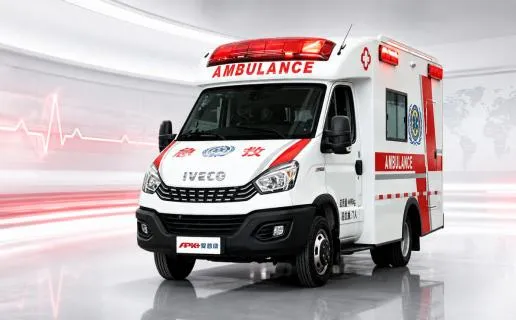
APK Vehicle produces ambulances across multiple vehicle classes—including the BLS ambulance, advanced life support, ICU, and electric models—giving buyers access to a supplier with ambulance-specific engineering experience rather than a general vehicle converter.
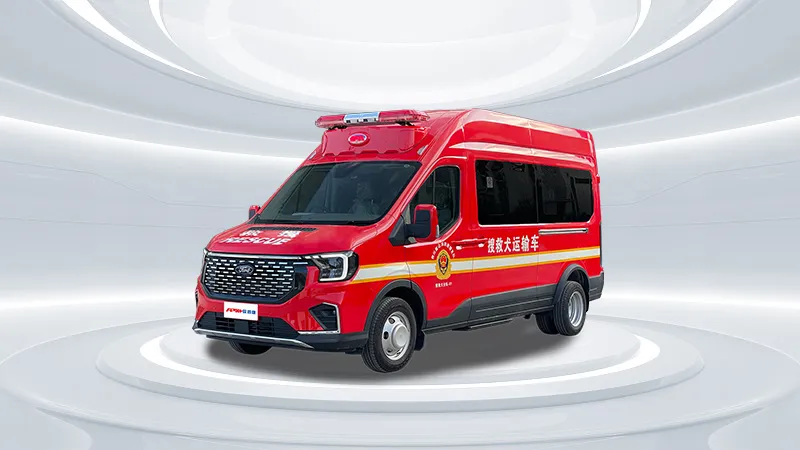
The company develops its ambulances on a range of chassis platforms including Ford, JMC, Maxus, Iveco, and Geely. Its electric ambulance offering includes models such as the Geely Farizon Super VAN platform, with region-specific customization available for medical interiors, battery configurations, and onboard equipment suites. For fleets requiring critical-care transport, APK can also develop a mobile ICU configuration with suitable monitoring, ventilation, medical power, storage, and patient-care equipment.
APK also maintains an engineering team that works with fleet buyers on layout planning, equipment integration, and compliance with destination-country standards. For ambulance distributors and government procurement agencies, this means a single point of contact for vehicle specification, customization, and delivery coordination.
Contact the supplier directly to discuss your fleet requirements, request specifications for electric ambulance models, or inquire about customization options for your operational environment.