






Tel:
+86 15680081222
In the realm of transportation, understanding the passenger vehicle definition is crucial for consumers, automotive manufacturers, and regulatory bodies alike. Passenger vehicles are integral to daily commuting, personal travel, and the facilitation of numerous societal activities. However, distinguishing between different vehicle classifications can sometimes be intricate due to overlapping features and varied regulatory requirements. This article provides a detailed examination of what constitutes a passenger vehicle in the USA, highlighting legal definitions, examples, differences from commercial vehicles, registration requirements, and addressing common misconceptions.

In the United States, the passenger vehicle definition is primarily governed by regulatory bodies such as the Department of Transportation (DOT) and Environmental Protection Agency (EPA). According to these organizations, passenger vehicles typically include cars, SUVs, vans, and sometimes light trucks with a gross vehicle weight rating (GVWR) of under 10,000 lbs, designed principally for the carriage of passengers. The criteria also denote that these vehicles must adhere to certain emissions standards and safety features to qualify as passenger vehicles.
| Category | Weight Criteria | Passenger Capacity |
|---|---|---|
| Cars | Under 10,000 lbs | Typically 4-5 |
| SUVs | Under 10,000 lbs | Typically 7-8 |
| Vans | Under 10,000 lbs | Up to 12 |
| Light Trucks | Under 10,000 lbs | Varies |
It's essential to recognize that vehicles not meeting these requirements might fall into other categories, such as commercial vehicles, which could include an ambulance truck for sale or other specialized vehicles like a mobile clinic van.
The passenger vehicle category is diverse, incorporating numerous makes and models. Common examples include the standard sedan, hatchback, and crossover. Each type offers distinct features catering to various consumer needs—from fuel efficiency and compact design to spacious interiors and off-road capabilities.
For instance, many families opt for SUVs for their versatility and ample space, which also offer modified versions for specific purposes, such as mobile medical applications like a mobile medical van. These adaptations ensure that passenger vehicles can serve specialized needs without exceeding the standard regulatory definitions.
Moreover, smaller passenger vehicles such as hybrid cars often blur the lines with emerging electric vehicles, showcasing the evolving landscape of passenger vehicle development. Understanding these passenger vehicle definitions can also be useful when considering equipment for emergency vehicles for sale, especially those that transition traditional passenger functions to emergency support setups.
While both passenger and commercial vehicles serve the fundamental purpose of transportation, the usage, design, and regulatory stipulations vary significantly between them. Commercial vehicles are categorized primarily by their usage in business or industrial capacities, often exhibiting different weight classifications and purposes.
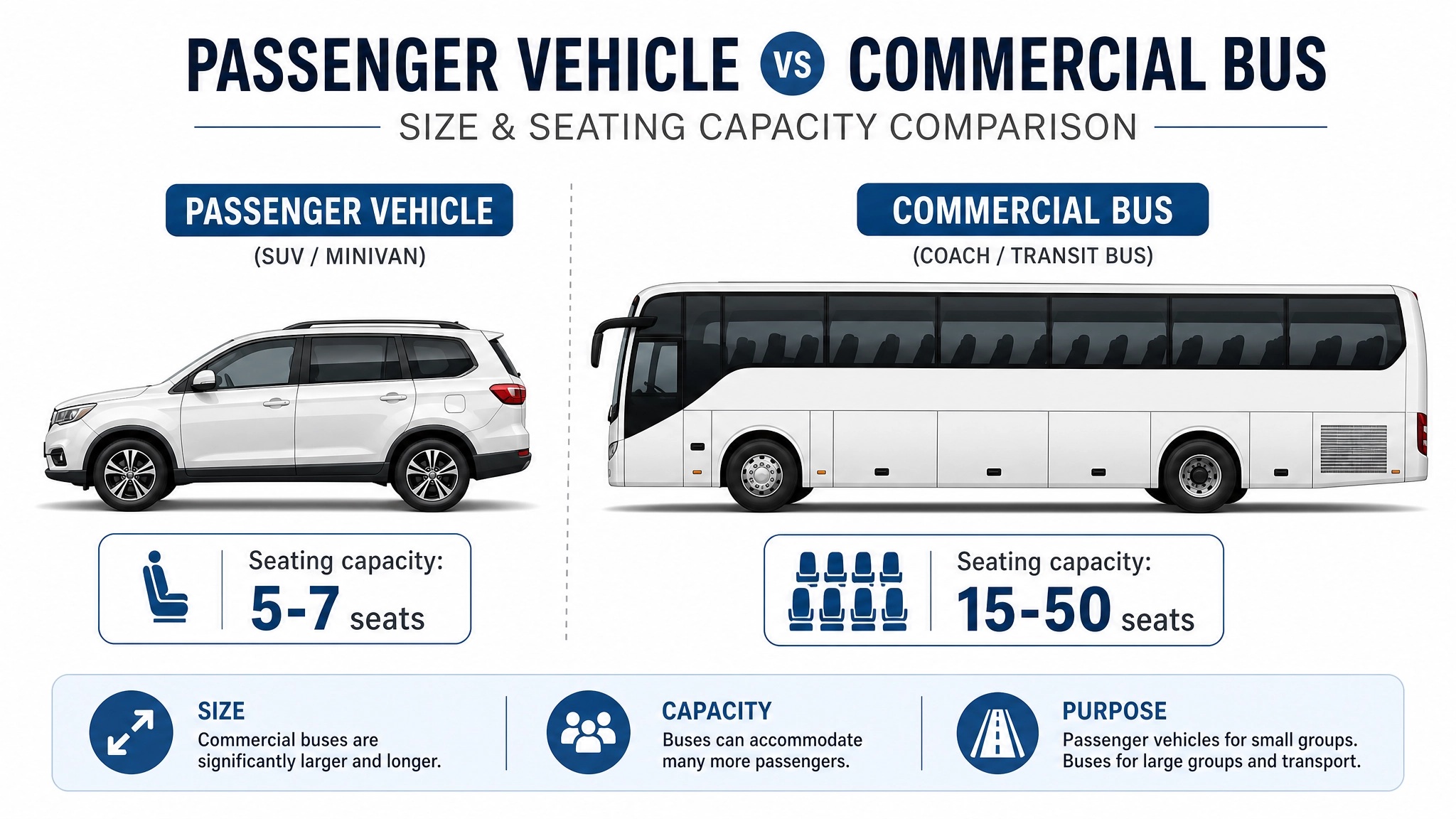 Common commercial vehicles include delivery trucks, buses with wheelchair lifts, rear load trash trucks, and type II ambulances. The primary distinction lies in their construction with the intent to transport goods or passengers for hire rather than personal use.
| Feature | Passenger Vehicle | Commercial Vehicle (CMV) |
|---|---|---|
| Primary Purpose | Personal, family, or recreational transport. | Business operations, transporting goods for hire, or transporting passengers for compensation. |
| Ownership | Typically owned or leased by an individual. | Owned by a business, corporation, government agency, or fleet operator. |
| Weight Threshold | Generally under 1010,000000 lbs. Gross Vehicle Weight Rating (GVWR). | Often 10,00110001 lbs. or more GVWR (though smaller vehicles can be commercial if used for business). |
Furthermore, modifications such as k9 police cars, type I ambulances, and mobile icu ambulance might characterize vehicles as commercial despite exhibiting some similarities to passenger vehicles. Thus, understanding these distinctions is crucial for compliance and operational planning.
The registration process for passenger vehicles involves several steps to ensure compliance with federal and state standards. Owners must understand these requirements to facilitate smooth registration and avoid legal complications.
Key aspects of registration include thorough verification of ownership documents, submission of emissions testing certificates, and completion of insurance formalities. States might offer specific exemptions or benefits for certain types of vehicles, like electric passenger cars, simplifying the registration landscape.
Additionally, special vehicles such as medium duty ambulances for sale or modified passenger vehicles like those adapted for vehicle rescue operations, may require custom registration processes due to their unique structural and functional characteristics.
In exploring the passenger vehicle definition, several misconceptions can arise, primarily due to overlapping features with commercial vehicles and special-purpose modifications. One notable misconception is equating all vans with passenger vehicles, when many fall into commercial use categories due to design and function intentions, such as mobility scooter transport or those designed as mobile clinic for sale units.
Additionally, there is often confusion regarding the scope of passenger vehicle modifications, such as adapting cars for wheelchair access or fitting ems stretchers or manual resuscitation bag compartments. While some consumers perceive these as easing the passenger vehicle definition, regulatory bodies have specific guidelines to differentiate such categories for safety and operational compliance.
Addressing these misconceptions is essential for accurate consumer understanding and proper adherence to registration and usage guidelines. Clarifying the passenger vehicle definition helps ensure the optimal use and application of these vehicles across varied needs.
The passenger vehicle plays a crucial role in the automotive landscape of the USA, influencing design, functionality, regulatory compliance, and consumer choice. Through understanding legal criteria, typical examples, differences from commercial vehicles, registration requirements, and common misconceptions, readers can better navigate the complexities of this vehicle category.
Whether exploring the possibilities of a mobile clinic van or understanding the nuances of emergency vehicles for sale, accurate knowledge of passenger vehicles enhances decision-making, compliance, and the potential for innovation within personal and commercial transportation sectors.
Reference links: