Tel:
+86 15680081222
With the Dragon Boat Festival approaching, activities such as dragon boat races, festive markets, and outdoor competitions are getting underway. The holiday bustle often brings large crowds and increased pressure on on-site management. For event organizers, safety measures cannot focus solely on maintaining order and traffic flow; emergency medical support is an equally indispensable component.
The key to the smooth operation of large-scale events lies not in the total absence of emergencies, but in the ability to rapidly detect, immediately treat, and timely transport patients when incidents occur.
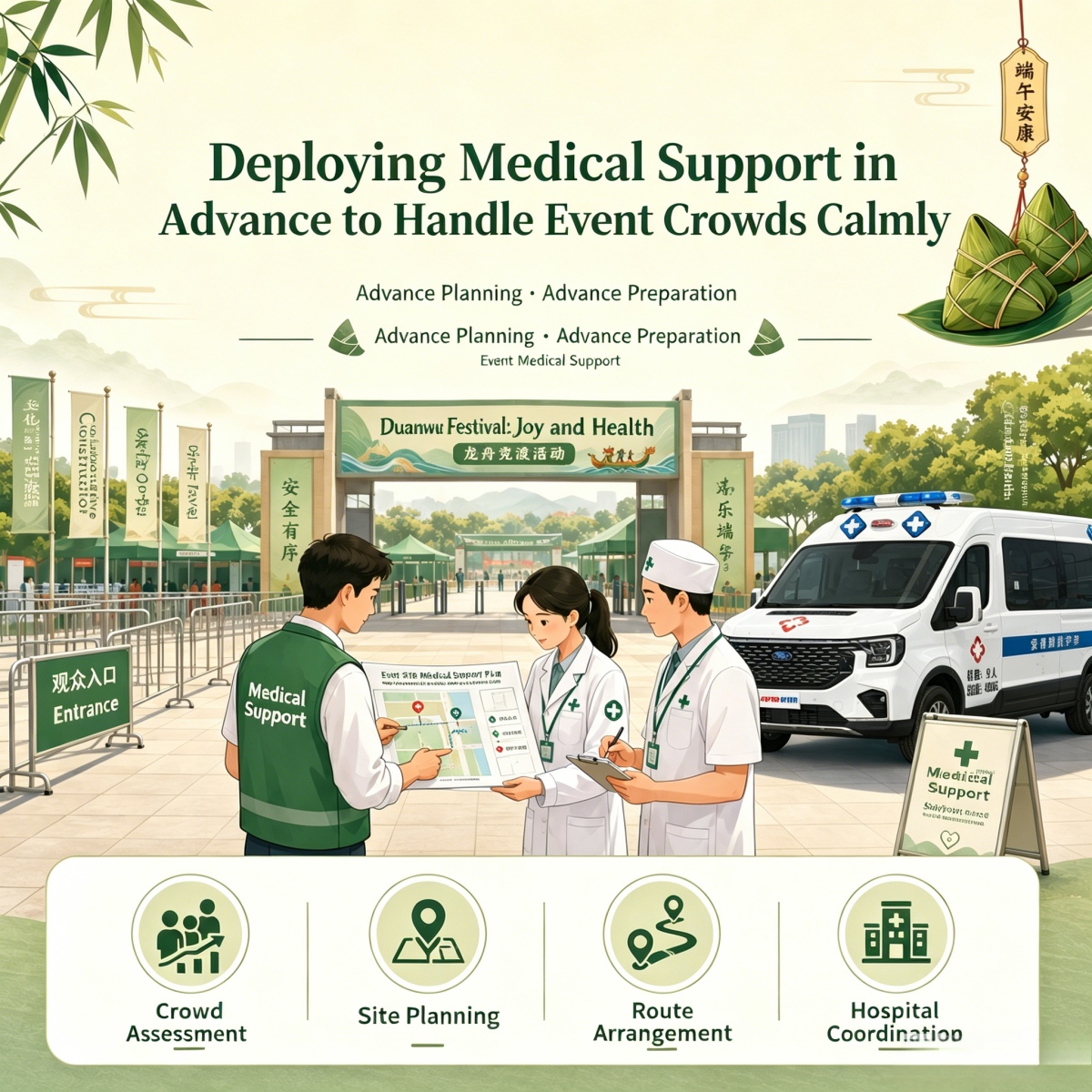
Medical support for large-scale events requires advance planning and coordination. Outdoor gatherings during the hot Dragon Boat Festival weather can easily lead to heatstroke, injuries, and sudden medical emergencies. Organizers must pre-determine station locations, emergency access routes, designated hospitals, and responsible personnel, while implementing risk prevention measures beforehand to avoid hasty, last-minute responses.
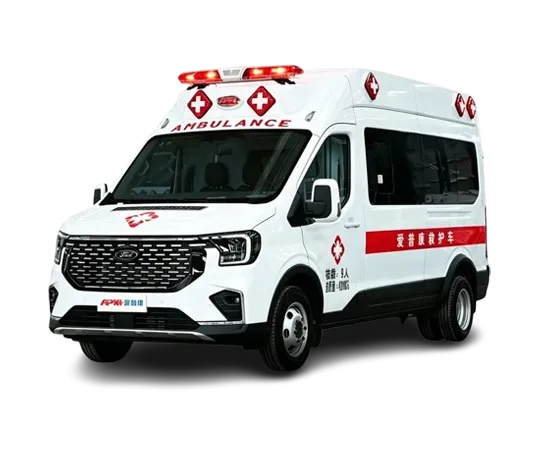
Although many events station ambulances on-site, rescue operations often face obstacles: vehicles get hemmed in by barriers, stalls, other vehicles, or crowds; planned emergency lanes get blocked; and on-site staff are unfamiliar with rescue routes.
Effective emergency support goes beyond merely having an ambulance present; it requires ensuring the vehicle can arrive, transport patients, and depart quickly.
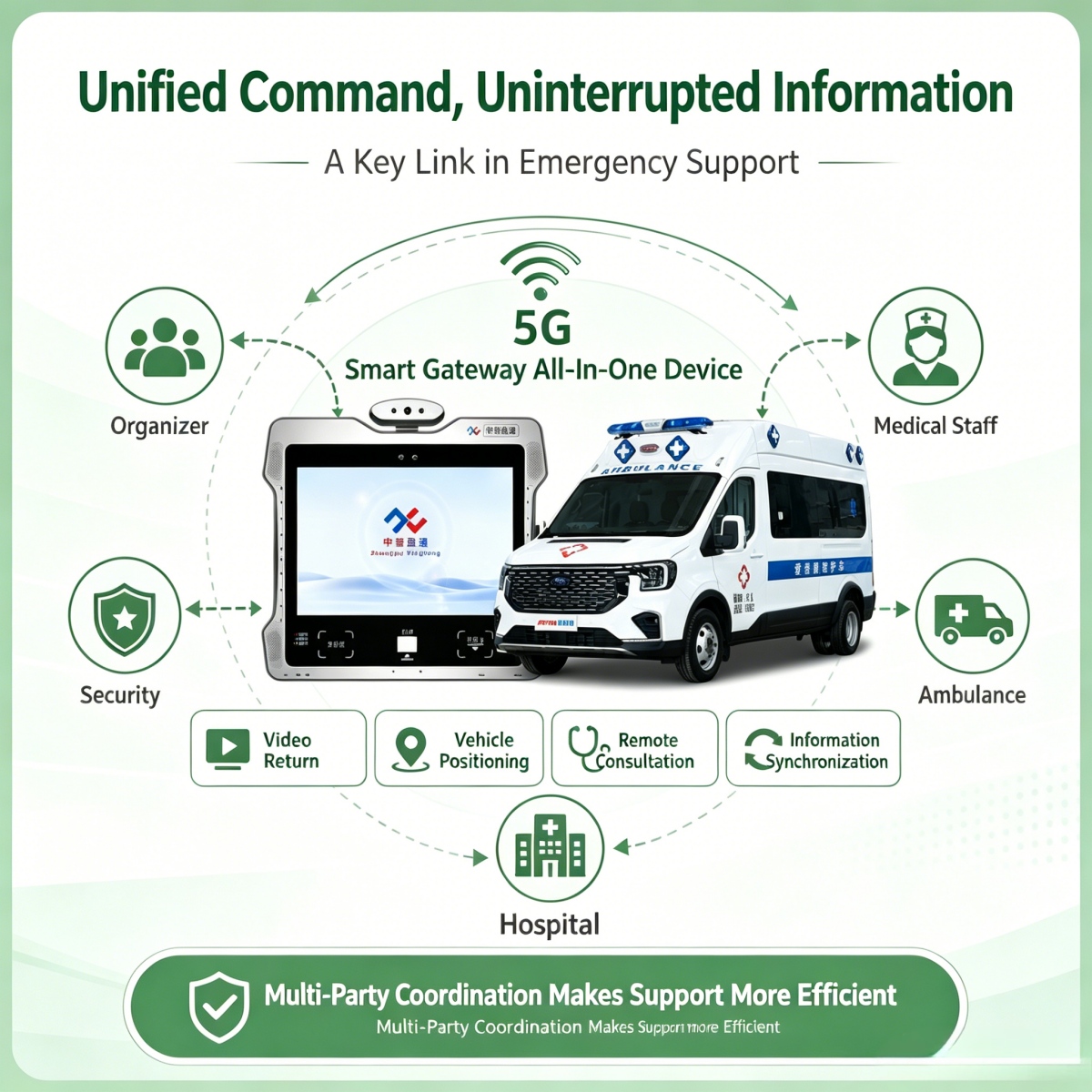
Medical support for large-scale events involves multiple parties, including organizers, security personnel, medical staff, ambulance crews, hospitals, and on-site workers. The greatest risk is an incident occurring while information transmission lags, responsibilities remain unclear, and command efforts are out of sync.
Therefore, a clear information coordination mechanism must be established in advance. Roles and responsibilities—such as who detects and reports incidents, who handles on-site treatment, who manages vehicle dispatch, who clears access routes, and who coordinates with hospitals—must be assigned beforehand.
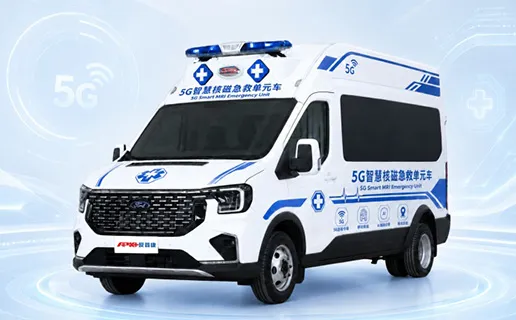
Digital tools—such as vehicle-mounted 5G smart gateway units—can be leveraged to synchronize on-site conditions, vehicle locations, patient status, and transport information in real-time through video feeds, GPS dispatching, and remote consultations. This transforms medical support from isolated responses into a collaborative, multi-party effort. Integrating the Four-Stage Response Process to Build a Complete Closed-Loop Medical Emergency System
Medical support is far from a solitary task involving just one person, vehicle, or location; the key lies in establishing an integrated emergency chain comprising "detection, treatment, transport, and handover."
A seamless response loop is created through frontline hazard inspections, on-site emergency medical aid, standardized ambulance transport, and the exchange of information between pre-hospital and in-hospital teams. Coordinated collaboration across all roles eliminates bottlenecks in rescue operations. To address the complex environments of large-scale holiday events, personnel, vehicles, supplies, and communication equipment are fully prepared in advance, ensuring efficient linkage and rapid response across the entire rescue chain.
Dragon boat races, markets, and park festivities during the Dragon Boat Festival not only foster a rich cultural atmosphere but also serve as a comprehensive test of a city's public services and emergency response capabilities. The livelier the event and the denser the crowds, the more critical it becomes to plan safety measures in advance, implement them in detail, and organize them systematically.
From the strategic placement of medical standby stations and the constant readiness of ambulances to unified command and dispatch, the opening of dedicated "lifeline" transport routes, and seamless patient handovers between pre-hospital and hospital care—the core objective of medical emergency support for large events is to ensure that risks are managed and emergencies are met with timely responses.
Sanling Group focuses on building comprehensive emergency medical systems, with core operations spanning specialized emergency vehicles, 5G communication equipment, medical emergency devices, and the development of emergency software platforms. Catering to scenarios such as large-scale event support, pre-hospital emergency care, mobile medicine, and urban public emergency response, the Group continuously develops integrated solutions. In doing so, it establishes a robust medical emergency safeguard that ensures the safe conduct of holiday events—such as the Dragon Boat Festival—and provides citizens with peace of mind while traveling.