

Tel:
+86 15680081222
In the world of emergency medical services (EMS), understanding the differences between Advanced Life Support (ALS) and Basic Life Support (BLS) transport is crucial for both healthcare professionals and the general public. Each type of transport is designed to provide specific levels of medical care, impacting patient outcomes and healthcare costs. In this comprehensive guide, we will explore the key differences between ALS & BLS ambulance services, focusing on equipment, staffing, capabilities, billing, costs, and real-world applications. By the end of this article, you will have a clear understanding of when each type is appropriate and why these distinctions matter in various emergency scenarios, from vehicle rescues to mobile medical van operations.
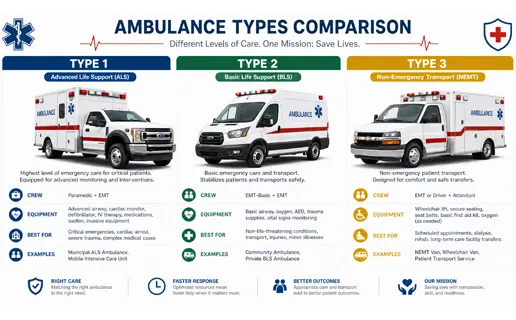
The equipment carried by ALS & BLS ambulance services is indicative of the level of care they provide. BLS ambulances are primarily equipped for basic emergency situations. They include equipment such as stretchers, CPR valve masks, manual resuscitation bags (commonly known as CPR bags), and basic bandaging material. These vehicles are typically staffed by emergency medical technicians (EMTs) who are trained to perform fundamental life-saving procedures such as oxygen administration, splinting, and patient stabilization.
| Equipment | BLS Ambulance | ALS Ambulance |
|---|---|---|
| Stretcher | Standard EMS Stretcher | Advanced EMS Stretcher with Additional Support |
| CPR Valve Mask | Standard Mask | Advanced Valve Mask with Monitoring Capabilities |
| IV Infusion Equipment | Not Available | IV Infusion Pump for Sale |
| Manual Suction Device | Available | Available with Advanced Features |
| EKG/ECG Machine | Not Available | Available |
ALS ambulances are much more extensively equipped and can handle scenarios that require more advanced medical interventions. In addition to the equipment found in BLS units, ALS ambulances carry tools such as EKG/ECG machines, defibrillators, advanced airway management equipment like endotracheal tubes, and portable infusion pumps for sale. These vehicles are staffed with paramedics who are trained for advanced medical procedures such as cardiac monitoring, IV therapy, and drug administration. The presence of such equipment ensures that ALS ambulances can cater to more severe medical emergencies, highlighting the necessity of choosing the right service for the right situation.
The staffing and capabilities of ALS and BLS ambulances differ significantly and play a critical role in deciding which service to deploy in an emergency. BLS ambulances are usually staffed by Emergency Medical Technicians (EMTs) whose primary role is to provide first aid and basic emergency care. EMTs can administer CPR, operate a splint, and provide basic respiratory management using a manual resuscitation bag.
On the other hand, ALS ambulances are staffed by paramedics with advanced training in pre-hospital emergency care. Paramedics are capable of performing more intricate procedures such as starting intravenous lines, administering drugs, and utilizing advanced airway management techniques. They are crucial in life-threatening situations, providing critical support until the patient can reach a medical facility.
Below is a comparison table highlighting staffing and capabilities:
| Factor | BLS Ambulance | ALS Ambulance |
|---|---|---|
| Staffing Level | Basic EMTs | Paramedics |
| Cardiac Monitoring | No | Yes |
| IV Administration | No | Yes |
| Advanced Airway Management | No | Yes |
| Drug Administration | Basic Only | Advanced/Varied |
This enhanced expertise and capability make ALS a critical component of the healthcare system, especially for high-stakes emergencies such as cardiac arrests, respiratory distress, and major trauma situations.
Understanding the financial implications is essential when choosing between BLS and ALS ambulance services. The cost of medical transport varies based on factors such as the level of care provided, the type of equipment used, and the distance traveled. BLS transport generally incurs lower costs due to the basic nature of the services and equipment involved. However, it becomes more expensive if additional services, such as mileage or additional EMTs, are required.
Conversely, ALS services are often more costly due to the advanced equipment and specialized care administered by paramedics. The cost structure includes charges for the use of advanced medical equipment like EKG machines and infusion pumps, as well as for specific medical interventions performed during transport.
Here is a simplified pricing structure comparison:
| Cost Factor | BLS Ambulance | ALS Ambulance |
|---|---|---|
| Base Charge | Lower Cost | Higher Cost |
| Mileage Fee | Standard Fee | Standard + Additional Fees |
| Advanced Medical Equipment Use | Not Applicable | Additional Charges |
| Drug Administration | Minimal Cost | Significant Cost |
The intricacies of medical billing and insurance policies can also impact the patient's out-of-pocket expenses. It's advisable for patients and families to consult with their medical insurance providers to understand their coverage for both types of ambulance services.
Choosing between ALS and BLS ambulance services involves assessing the nature of the medical emergency and the specific medical needs of the patient. BLS services are typically selected for non-life-threatening conditions that require basic medical attention. Examples include transporting patients with broken bones, minor illnesses, or post-operative needs where continuous monitoring is unnecessary.
Conversely, ALS services should be considered when dealing with serious medical emergencies that require advanced monitoring and treatment during transport. Situations such as heart attacks, severe injuries, respiratory issues, and critical care patients who need medications and close monitoring fall within the domain of ALS ambulance services.
Here is a guideline chart for choosing ambulance services:
| Scenario | Recommended Service |
|---|---|
| Minor Injury or Illness | BLS |
| Cardiac Arrest | ALS |
| Respiratory Distress | ALS |
| Basic Transport without Medical Intervention | BLS |
| Critical Condition Requiring Continuous Monitoring | ALS |
The choice between BLS and ALS can significantly impact patient outcomes, highlighting the importance of understanding the capabilities and limitations of each service in various medical emergencies.
In real-world scenarios, the choice between ALS and BLS can determine the efficiency and effectiveness of patient care during emergency transport. Specialized vehicles like the mobile medical van or the medium-duty ambulance for sale provide customizable options to suit specific regional and operational needs. For instance, a mobile clinic for sale can be configured to provide on-site ALS services in remote areas. EMS vehicles such as the medium-duty ambulance offer enhanced mobility and equipment capabilities to cater to diverse emergency scenarios efficiently.
Applications in vehicle rescue operations often utilize ALS services due to the potential for critical injuries requiring immediate medical intervention. Moreover, ambulances equipped with a central alarm system are essential in coordinating fast response during emergencies where time is a critical factor.
For special events or rural areas with limited access to hospitals, having a medical trailer or a specially equipped bus with wheelchair lift capabilities can provide necessary medical services on-site. These scenarios necessitate tailored solutions, highlighting the importance of both ALS and BLS services in ensuring comprehensive emergency medical care.
Emergency vehicles for sale today incorporate the latest in medical technology and vehicle design, supporting a wide range of scenarios from urban incidents to wilderness rescues. This adaptability is crucial in maintaining a robust EMS system capable of handling both everyday emergencies and extraordinary situations.
Understanding the distinctions between ALS and BLS ambulance services is vital for making informed decisions during medical emergencies. From the capabilities and training of the staff to the equipment housed within the ambulance, each component plays a significant role in patient outcomes. Whether it's deciding which level of care is needed for a trip to the hospital or planning for special event coverage with a medium duty ambulance for sale, choosing the right level of service ensures the provision of appropriate medical care.
The evolving landscape of EMS, with advancements in vehicle and medical technologies, continues to expand the capabilities of both ALS and BLS services. As the need for efficient and flexible emergency care grows, understanding these differences not only supports better decision-making but also enhances the overall healthcare experience.
For more comprehensive insight and service acquisitions, consult resources and suppliers specializing in emergency vehicles for sale and ambulance equipment.
References: