Tel:
+86 15680081222
As pre-hospital emergency care evolves toward digitalization and collaboration, the traditional ambulance model—limited to patient transport—can no longer meet modern emergency care needs. Many hospitals and emergency centers possess vehicles that are in good condition and well-equipped, yet they lack data interoperability; vital signs, on-site audio and video, and pre-hospital medical records cannot be transmitted back to the hospital in real time. While replacing the entire fleet requires a massive investment, continuing to use existing vehicles fails to meet the requirements for "smart" emergency care. Upgrading existing ambulances with 5G technology offers an effective solution to this dilemma.
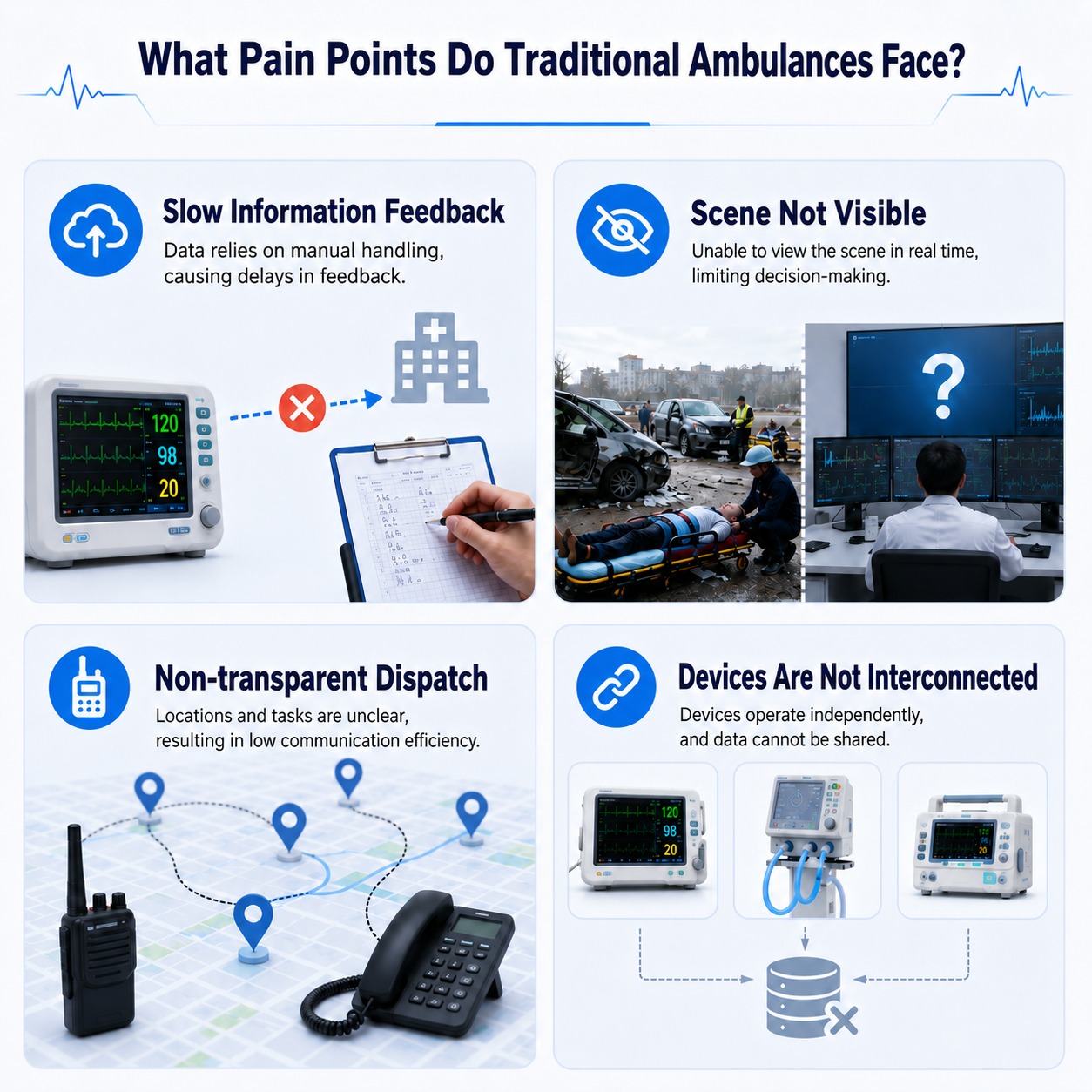
◆ Inability to transmit information in real time. Although vital signs can be monitored in real time via onboard equipment, data relies heavily on manual observation and recording by medical staff, making timely synchronization with the receiving hospital difficult. Hospitals struggle to gain a comprehensive understanding of the patient's condition before the ambulance arrives, hindering the advance preparation of critical care resources.
◆ Lack of visibility into on-site conditions. In scenarios such as traffic accidents or sudden medical emergencies, hospitals cannot view the patient's status or the treatment process in real time. Furthermore, when dealing with complex cases, onboard medical staff often struggle to obtain timely support from hospital-based specialists.
◆ Opaque vehicle dispatch information. Some fleets still rely on telephones and two-way radios for dispatching, leading to issues such as unclear vehicle locations, delayed task status updates, and inefficient communication.
◆ Disconnect between vehicles and equipment. Ambulances, patient monitors, and ventilators operate in isolation; data cannot be centrally collected or shared, preventing the equipment from realizing its full potential.
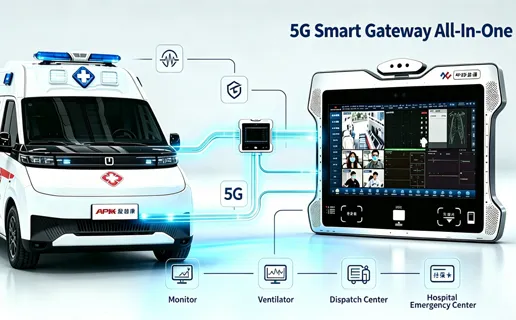
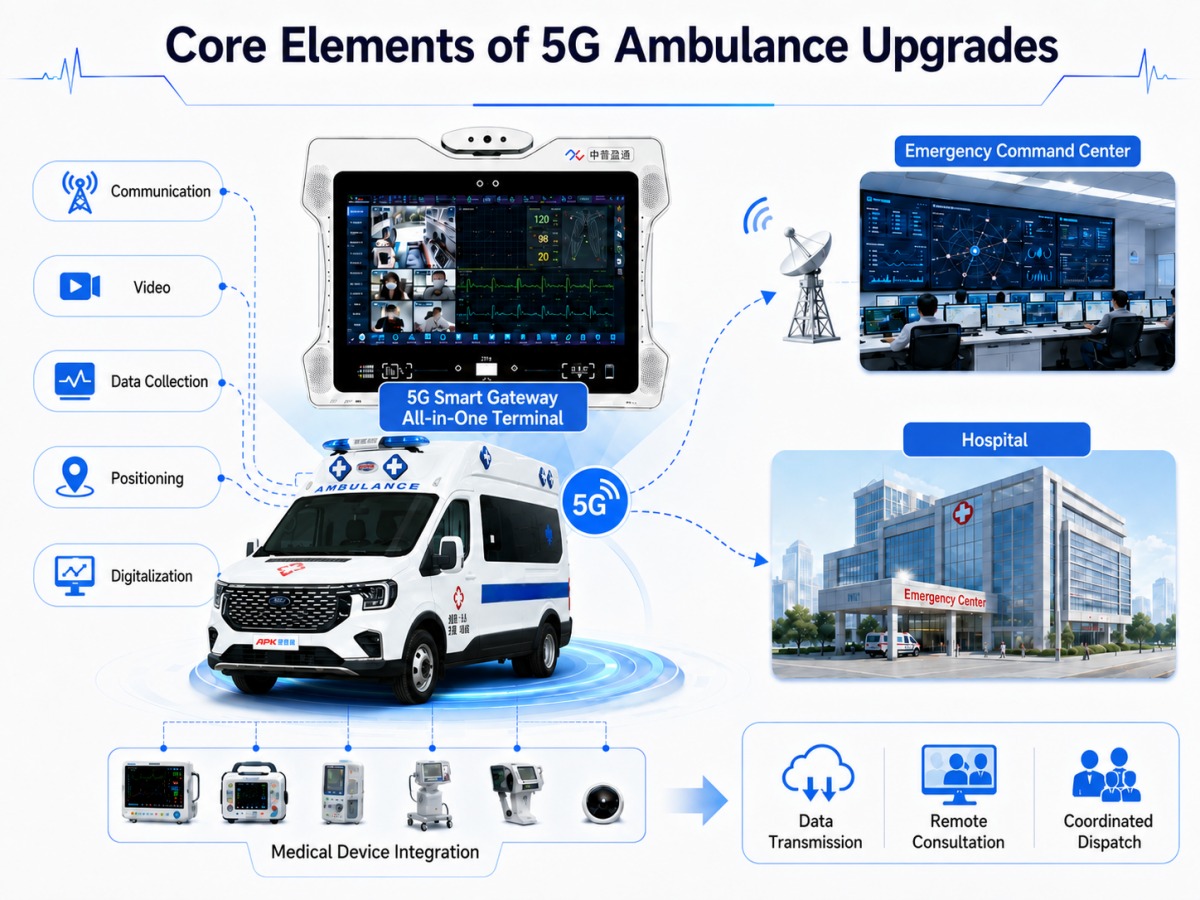
It involves installing an integrated system—combining communication, video, data acquisition, positioning, and information management capabilities—without significantly altering the vehicle's original structural framework. By deploying products such as Sanling Group’s 5G smart gateway and smart central control units, the system establishes information links connecting the ambulance, medical equipment, the emergency dispatch center, and the receiving hospital, thereby transforming a conventional ambulance into a smart emergency vehicle capable of data transmission, remote consultation, and coordinated dispatch.
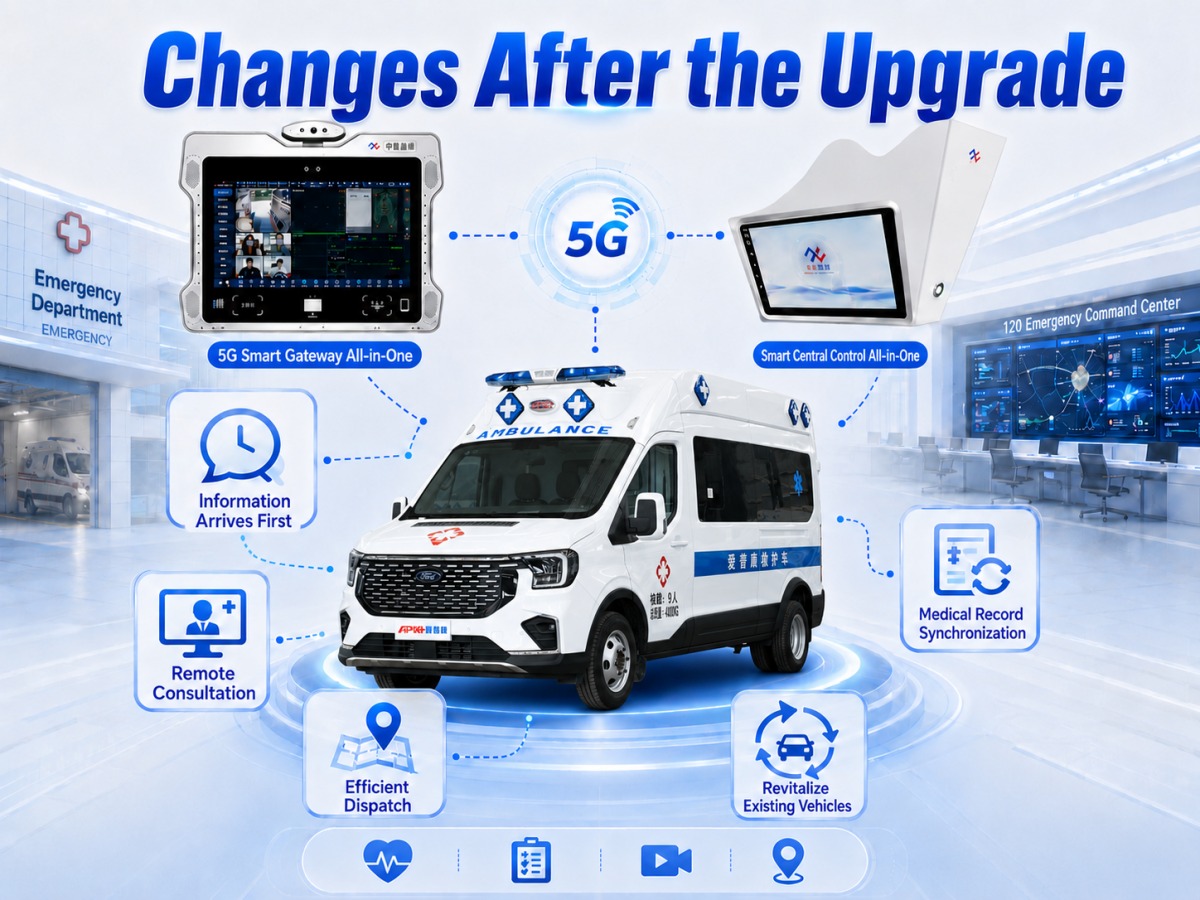
1. Information arrives before the patient. Vital signs, pre-hospital medical records, and on-site audio/video feeds are transmitted to the hospital in advance; receiving departments can prepare emergency resources beforehand, allowing treatment to begin immediately upon the patient's arrival.
2. Real-time guidance via remote consultation. Hospital specialists can remotely view the vehicle's interior and the patient's condition, providing instant guidance on on-site treatment.
3. Seamless integration of pre-hospital medical records. On-board medical staff can input patient information, medical history, vital signs, emergency measures, and medication details. This data is synchronized with the hospital, reducing the need for repetitive questioning and ensuring better preparation for treatment.
4. More efficient vehicle dispatching. Emergency centers can track vehicle locations, routes, and mission statuses in real time, enabling the dispatch of the nearest vehicles and centralized coordination.
5. Extending the utility of existing vehicles. For ambulances in good condition with well-designed medical compartments, a 5G upgrade addresses information technology gaps while keeping investment costs under control, thereby alleviating the financial pressure associated with replacing an entire fleet at once.
Upgrading ambulances for 5G capabilities involves more than just adding equipment; it entails the systematic integration of the vehicle itself, medical equipment, communication networks, and software platforms.
Sanling Group offers comprehensive, one-stop services—including vehicle assessment, modification design, installation of 5G smart terminals, medical equipment data integration, audio-video transmission, and the linking of pre-hospital and in-hospital systems. These services help clients revitalize existing vehicle assets, transforming traditional ambulances from simple transport units into smart, collaborative hubs that truly realize the concept of "treatment begins the moment the patient boards."