

Tel:
+86 15680081222
For private emergency service centers, rescue stations, ambulance fleet operators, and overseas ambulance manufacturers, choosing the right ambulance platform is not only about vehicle size. It is about whether the vehicle can support fast patient loading, organized medical equipment, stable power supply, safe oxygen delivery, and a practical interior layout for daily emergency transport.
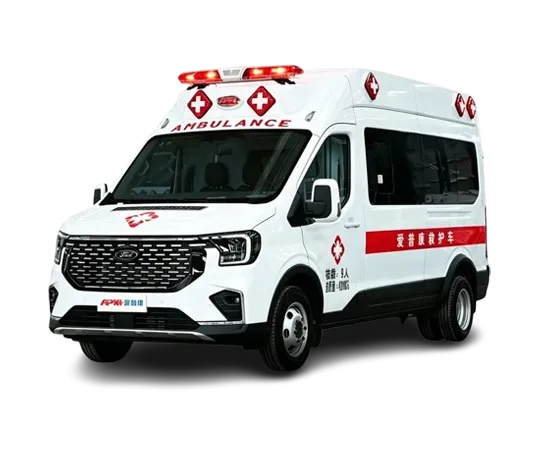
The V362 Ford Transit ambulance is a practical platform for basic life support applications because it offers a balanced combination of medical cabin space, driving flexibility, emergency equipment integration, and customization potential. For buyers who need a reliable BLS ambulance solution rather than a one-size-fits-all vehicle, a well-planned custom V362 configuration can make daily operations more efficient and easier to manage.
As a manufacturer and modifier of special-purpose vehicles, APK provides customization support for internal layouts, functional configuration, and exterior design. This makes it suitable for buyers who need vehicles adapted to private emergency response, local rescue use, commercial patient transfer, or downstream ambulance manufacturing projects.
A V362 Ford Transit ambulance is commonly used as a BLS emergency transport vehicle designed to support basic first aid, patient transfer, rescue response, and non-critical medical transportation. In markets that use North American ambulance classifications, its integrated van body and BLS-oriented application make it comparable to a van-based type 2 ambulance, although the final vehicle classification should always follow local regulations.
In practical use, this type of ambulance is suitable for private EMS operators, rescue stations, community response teams, industrial emergency units, event medical service providers, and ambulance builders who need a flexible vehicle platform for local market adaptation.
Unlike highly specialized ICU or advanced life support vehicles, a BLS ambulance focuses on safe transport, fast access to essential equipment, basic oxygen supply, stretcher loading, patient monitoring preparation, and an organized medical cabin. This makes the Ford Transit Custom V362 platform especially useful for operators who need a balance between cost control, daily usability, and professional emergency response capability.
For overseas buyers, the key question is not simply whether the vehicle can be used as an ambulance. The better question is whether the platform can be customized to match local operating models, patient transport workflow, and equipment requirements. This is where a custom V362 ambulance solution becomes more valuable than a standard van conversion.
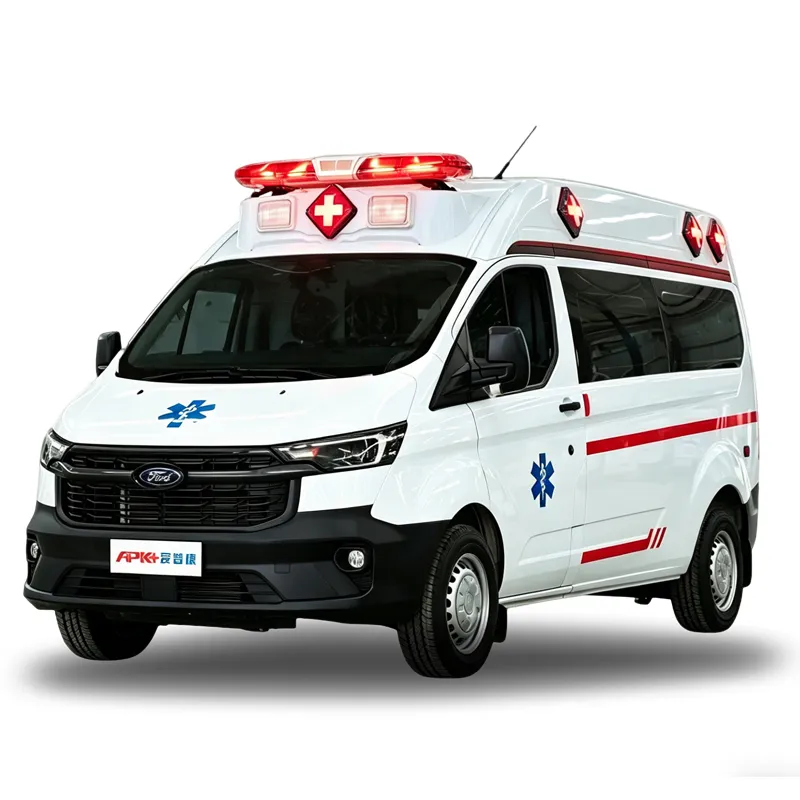
A flexible custom V362 layout helps private emergency operators improve cabin workflow, reduce wasted movement, and make essential equipment easier to reach during patient transport.
Private EMS centers and rescue stations often work under different conditions from public hospital fleets. They may serve event standby, industrial parks, tourist areas, construction zones, remote communities, senior-care transport, or commercial emergency-response contracts. Each scenario may require different equipment priorities.
For example, one operator may need more storage space for oxygen accessories and first-aid kits, while another may need a cleaner patient-transfer layout with more seating and easier stretcher access. An ambulance builder may require a semi-standardized medical cabin that can be adapted later for local compliance, branding, or equipment installation.
A good custom V362 ambulance layout should consider:
• Stretcher loading direction and access space
• Medical staff seating position and movement route
• Oxygen cylinder cabinet and oxygen pipeline arrangement
• Medicine storage, overhead cabinet, and lower storage cabinet layout
• AC and DC power socket placement
• Warning lights, siren control, and emergency lighting design
• Interior materials that are easy to clean and maintain
• Exterior graphics and visibility for rescue use
This layout-first approach helps buyers avoid a common problem: purchasing a vehicle that looks like an ambulance but does not fully support the operator's daily workflow.
A BLS medical cabin should provide organized space for patient loading, oxygen delivery, basic treatment support, medical storage, lighting, ventilation, and electrical power.
In the Ford Transit V362 ambulance configuration, the medical cabin can include oxygen cylinders, a humidifier bottle, ventilator interface, oxygen pipeline, oxygen pressure regulator, medical cabin air conditioning, top lighting, IV hook, ceiling handrail, partition wall, storage cabinets, and an automatic boarding stretcher.
For private EMS and rescue station use, these details matter because the vehicle must support repeated daily operations. The medical team should be able to load a patient quickly, secure the stretcher safely, access oxygen equipment efficiently, and keep medical supplies organized during transport.
The following table shows how different cabin elements support real operating needs:
Cabin Element | Operational Value | Buyer Benefit |
Automatic boarding stretcher | Supports faster patient loading and unloading | Improves response efficiency and reduces manual handling pressure |
Oxygen cylinder and pipeline | Supports basic respiratory assistance during transport | Essential for BLS ambulance readiness |
Medical storage cabinets | Organizes medicine, tools, and emergency supplies | Creates a cleaner and more efficient working cabin |
AC/DC power sockets and inverter | Supports onboard medical and auxiliary electrical devices | Helps operators prepare for different equipment needs |
Warning lights and siren system | Improves emergency visibility and road awareness | Supports rescue response and safer transport operations |
For ambulance manufacturers, these cabin elements also provide a useful base for localized conversion. The ford V362 transit custom platform can be planned with standard configurations first, then adjusted for branding, equipment grade, or market-specific requirements.
APK customizes special-purpose vehicles by adapting the interior layout, functional configuration, and exterior design to match the operating needs of different emergency service scenarios.
For a V362 Ford Transit ambulance project, customization can start from the buyer's role. A private EMS center may focus on practical operation and cost control. A rescue station may need strong visibility, basic emergency readiness, and durable cabin materials. An overseas ambulance manufacturer may care more about repeatable layout planning, equipment integration, and downstream modification flexibility.
APK can support customization in several directions:
• Interior layout: medical cabin space planning, seating arrangement, cabinet configuration, partition design, and stretcher access.
• Functional configuration: oxygen system, lighting system, warning lights, siren, power supply, medical storage, air conditioning, and optional medical devices.
• Exterior design: ambulance body graphics, emergency markings, color matching, reflective elements, and fleet branding.
• Equipment preparation: reserved space and interfaces for monitors, defibrillators, ventilators, smart control systems, and communication devices.
This is important for buyers who are not simply looking for a finished vehicle, but for a partner that understands ambulance modification. A custom V362 ambulance should match the buyer's service model, not force the buyer to adjust operations around a fixed layout.
For fleet operators and ambulance builders, APK's customization capability also helps standardize multiple vehicles while still allowing different configuration levels. For example, a buyer can develop a basic version for patient transfer, a rescue-response version for emergency standby, and a higher-equipment version for more demanding transport scenarios.
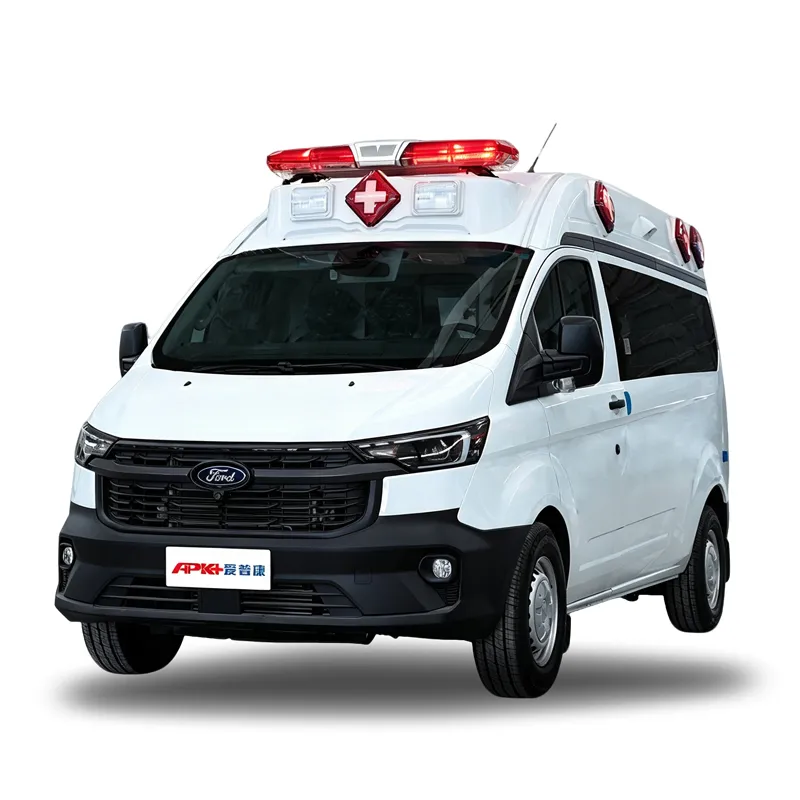
Overseas ambulance builders should confirm vehicle specifications, steering type, medical cabin layout, equipment configuration, local compliance requirements, and after-sales communication before placing an order.
Different countries and regions may have different rules for ambulance registration, emergency lighting, siren use, medical device installation, emissions, roadworthiness, and import documentation. For this reason, buyers should treat the Ford Transit Custom V362 ambulance as a customizable platform and verify local requirements before finalizing production details. For projects intended for the U.S. market, buyers should also confirm what qualifies as a passenger vehicle, because a van converted for ambulance use may be registered and regulated differently from a standard passenger van.
Before ordering, buyers should prepare the following information:
• Target use: private EMS, rescue station, patient transfer, event standby, industrial emergency response, or ambulance manufacturing
• Required steering type: LHD or RHD
• Preferred fuel type, transmission type, and configuration level
• Required seating and stretcher arrangement
• Medical equipment list and optional device requirements
• Exterior design, warning light style, and body marking requirements
• Local ambulance standards or import requirements that must be considered
This preparation helps APK provide a more accurate configuration proposal. It also helps overseas ambulance manufacturers shorten the communication cycle and reduce modification risks after delivery.
For buyers who are unsure which configuration is suitable, the best step is to share the target market, application scenario, preferred equipment list, and expected fleet quantity with APK. The team can then recommend a practical V362 Ford Transit ambulance configuration for further discussion.
A practical Ford Transit Custom V362 ambulance solution should combine a suitable vehicle platform, efficient medical cabin layout, reliable emergency equipment integration, and customization support for real operating scenarios.
For private EMS centers, rescue stations, commercial patient transport providers, and overseas ambulance builders, the value of the V362 Ford Transit is not only in the base vehicle. Its real value comes from how well the vehicle can be modified for medical workflow, rescue visibility, equipment access, patient loading, and local market requirements.
With experience in special-purpose vehicle manufacturing and modification, APK can help buyers plan a custom V362 ambulance solution based on different medical transport and rescue response needs. If you are evaluating a Ford Transit V362 ambulance project for private emergency service, rescue operation, or local ambulance production, contact APK to discuss your required layout, equipment configuration, and exterior design.
Yes. APK can customize the internal layout, equipment configuration, and exterior design according to the requirements of private EMS centers, rescue stations, fleet operators, and overseas ambulance builders.
The vehicle is more suitable for private emergency centers, rescue service providers, patient transport operators, and ambulance manufacturers. Buyers should always confirm local ambulance registration, import, and medical vehicle compliance requirements before deployment.
Common customization options include medical cabin layout, stretcher system, oxygen system, storage cabinets, warning lights, siren, power supply, exterior markings, seating arrangement, and optional medical equipment preparation.
Yes. Overseas ambulance manufacturers can use the platform for localized ambulance conversion, fleet projects, or downstream configuration adjustment, depending on local market and regulatory needs.
Buyers should prepare the target application, required steering type, cabin layout preference, equipment list, exterior design requirements, and local compliance references. This helps APK provide a more practical configuration proposal.