
Tel:
+86 15680081222
The recently released "15th Five-Year Plan for Building a New Energy System" outlines a goal to establish a clean, low-carbon, safe, and efficient new energy system by 2030, specifically calling for the improvement of smart, open charging infrastructure that combines fast and slow charging capabilities. While the plan does not directly target the ambulance industry, trends such as the shift toward green, low-carbon operations, the electrification of end-use energy, and the expansion of charging infrastructure offer new perspectives on the application of new energy ambulances in specific operational scenarios.
Against this policy backdrop, ambulances—as critical specialized vehicles for safeguarding public life—must undergo upgrades toward greener and smarter technologies tailored to various emergency response scenarios. Thanks to their unique advantages, new energy ambulances offer irreplaceable value in a range of high-frequency emergency response situations.
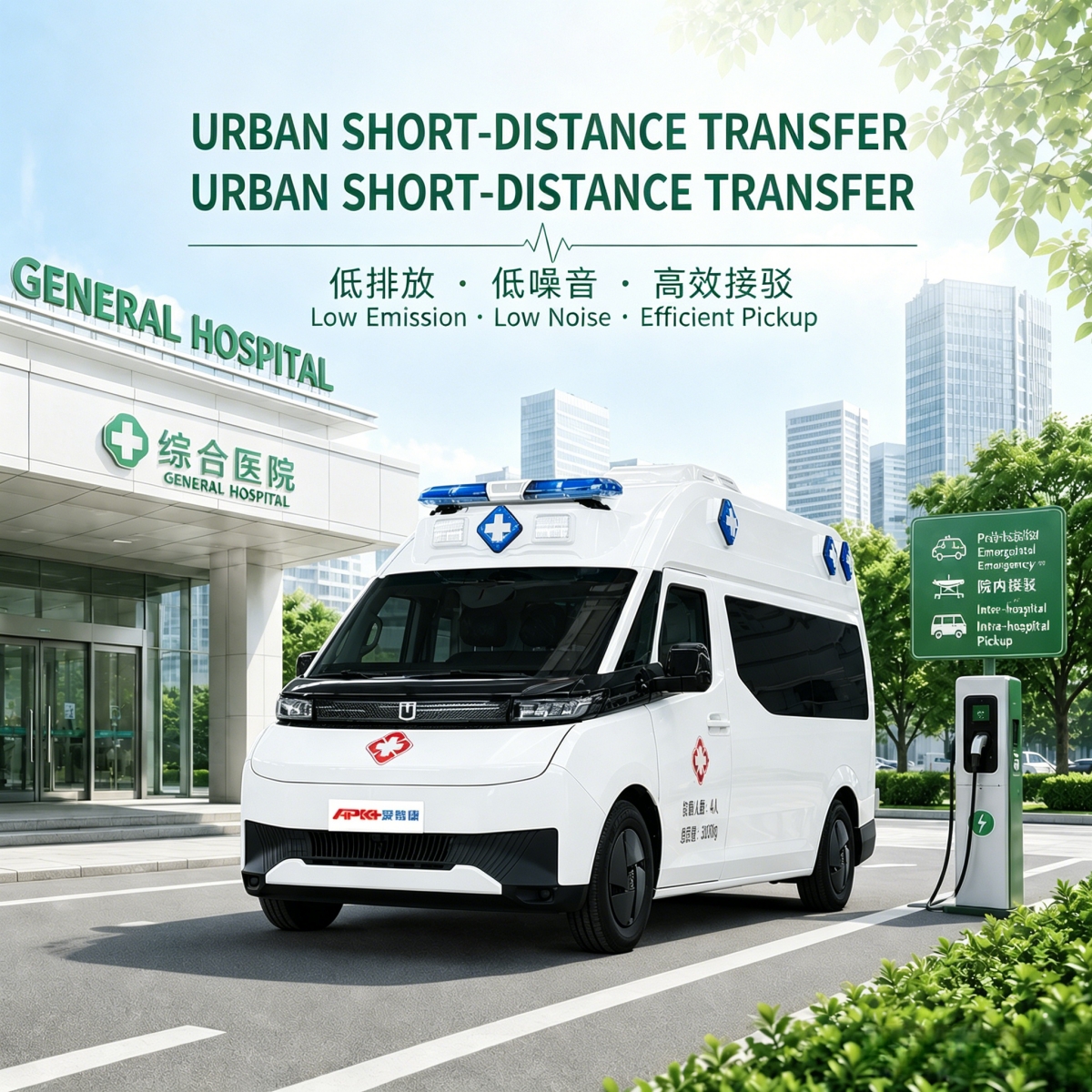
Urban pre-hospital emergency care, inter-hospital patient transfers, and internal hospital campus shuttles represent the most frequent use cases for emergency vehicles. These routes involve fixed operating radii and high dispatch frequencies; combined with the comprehensive coverage of charging stations in Chinese cities, these factors create an ideal foundation for the large-scale deployment of new energy ambulances.
Compared to traditional fuel-powered ambulances, new energy models offer zero tailpipe emissions and quiet operation, making them perfectly suited for areas sensitive to noise and air quality, such as hospital campuses, densely populated residential complexes, and older urban districts. Nighttime dispatches do not generate the engine roar that disturbs residents, thereby significantly reducing the likelihood of noise complaints.
Medical institutions can schedule vehicle charging during periods when there are no active emergency calls. Long-term use leads to substantial savings on fuel costs and a stable reduction in overall operating expenses, while simultaneously helping hospitals meet performance targets related to "green hospital" initiatives and energy conservation/emission reduction.
Given adequate charging infrastructure and stable operating routes, these vehicles also help lower daily energy costs and improve operational efficiency.
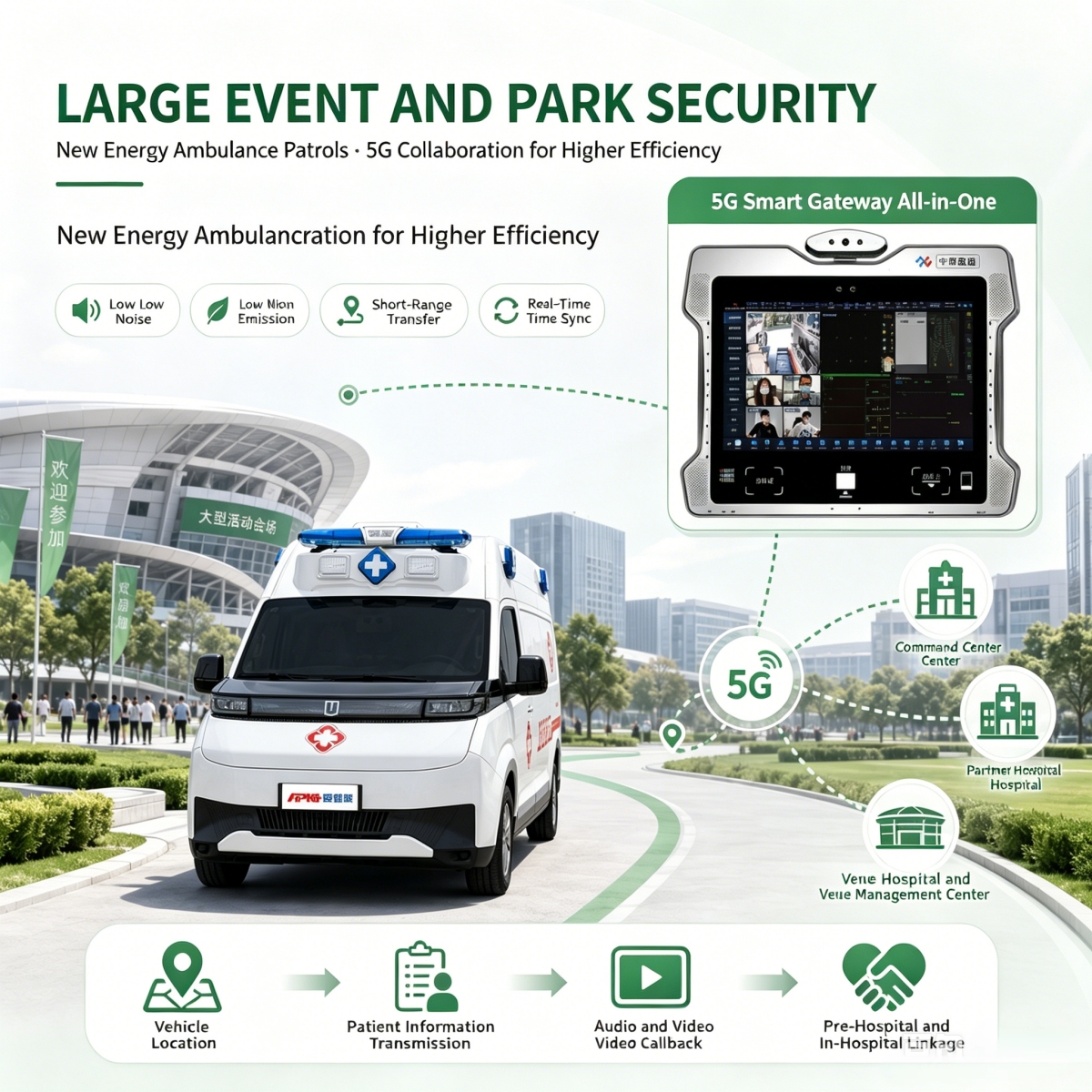
Medical support tasks—such as coverage for sports events, large exhibitions, government conferences, and routine standby duties at industrial parks—typically involve on-site standby, localized patrols, and short-distance transport of patients with minor conditions. With manageable daily mileage requirements, these scenarios represent a strong operational niche for new energy ambulances. Many large-scale public events now enforce environmental access standards for vehicles; thanks to their zero-emission capabilities, new energy ambulances serve as an excellent option for medical support. Their quiet operation ensures no disruption to the event environment. Furthermore, equipped with an integrated 5G smart gateway, they enable real-time vehicle tracking, vital sign data transmission, and synchronized audio-video streaming for emergency care, effectively linking pre-hospital and in-hospital information systems.
Beyond basic on-site standby duties, these vehicles leverage digital capabilities to facilitate efficient, centralized dispatching, thereby elevating the professional standard of medical support for major events.
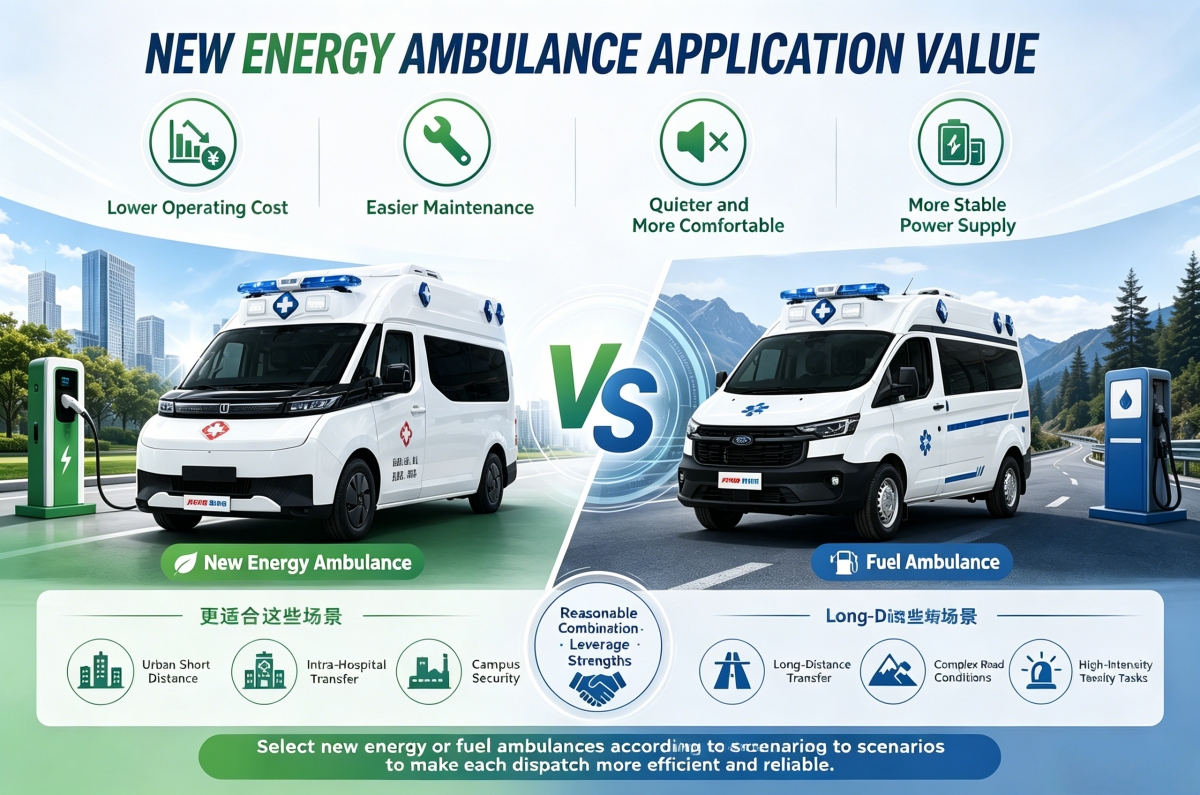
Compared to traditional fuel-powered ambulances, new energy ambulances offer distinct advantages in specific scenarios:
Significantly reduced operating costs: The cost of electricity per unit of energy is far lower than that of fuel; for frequent short-distance deployments, annual energy costs can be substantially lowered.
Simplified maintenance: Electric chassis structures are less complex, resulting in lower maintenance frequency and costs.
Quiet and comfortable: Operation is free from noise, vibration, and exhaust odors, ensuring smooth communication between medical staff and patients while alleviating discomfort for critically ill or agitated patients.
Stable power supply for onboard equipment: The traction battery provides long-lasting power to medical devices such as ventilators and monitors, allowing for extended standby periods without the need to idle the engine and consume fuel.
Of course, new energy ambulances are not intended to completely replace traditional fuel models; rather, the choice should be flexible based on the specific scenario. New energy ambulances excel in urban short-distance transport, hospital campus shuttling, and support within industrial parks, whereas fuel-powered ambulances remain indispensable for long-distance transfers, complex road conditions, and high-intensity missions. A balanced approach involves a mixed fleet, allowing each vehicle type to play to its strengths.
Against the backdrop of the ongoing development of a new energy system, the transition of emergency medical equipment toward greener and smarter technologies is imperative. Sanling Group (Aipukang)—with over two decades of expertise in specialized vehicle modification—closely aligns with national electrification policies. The company develops modification solutions for both fuel and new energy ambulances, integrating 5G communication hardware and comprehensive emergency medical systems to deliver a unified product portfolio. Backed by reliable modification technology and robust support services, the company provides one-stop solutions to optimize and upgrade pre-hospital emergency care systems across various regions.