


Tel:
+86 15680081222
When people think of ambulances, they often view them simply as vehicles for transporting patients. In reality, however, ambulances are categorized into various types based on usage scenarios, patient conditions, and medical equipment configurations, each suited to specific emergency tasks. Today, we explore three common types: transport ambulances, intensive care ambulances, and negative-pressure ambulances.
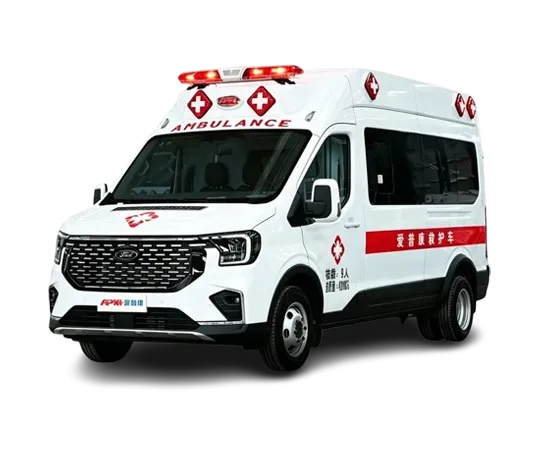
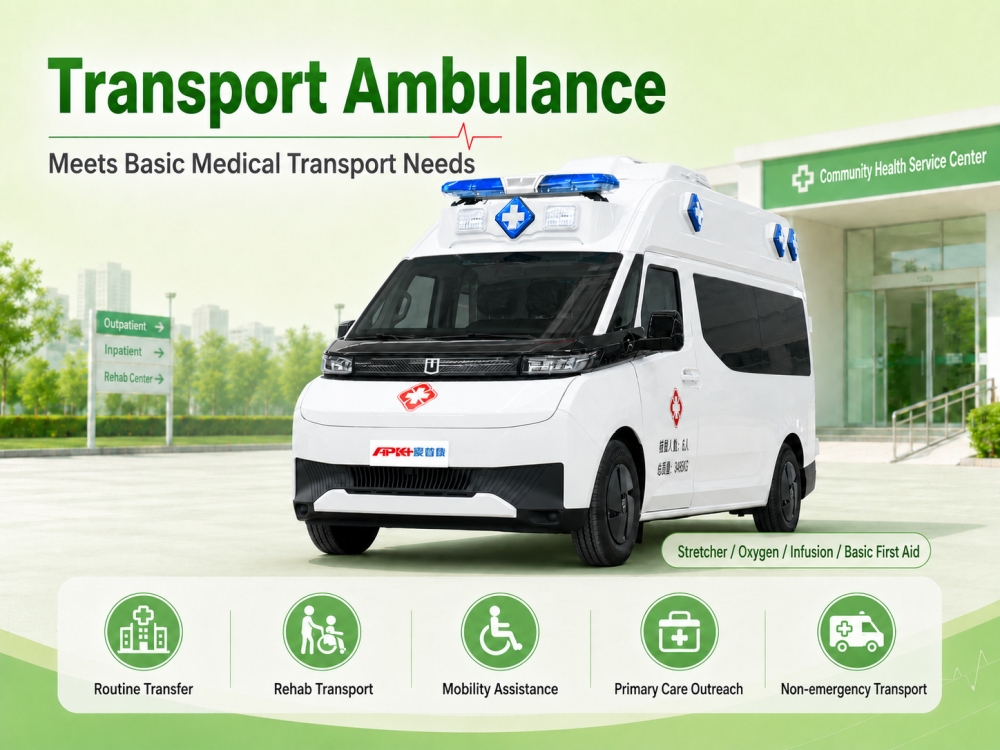
Transport ambulances are primarily used for moving patients whose conditions are relatively stable and who do not require complex emergency interventions during transit. They are typically equipped with stretchers, oxygen supply systems, IV equipment, lighting, disinfection facilities, medical cabinets, and basic first-aid supplies, meeting the patient's fundamental care needs during the journey.
Common use cases include:
◆ Routine inter-hospital transfers;
◆ Transporting patients to and from rehabilitation centers;
◆ Transporting individuals with limited mobility;
◆ House calls or outreach by primary healthcare institutions;
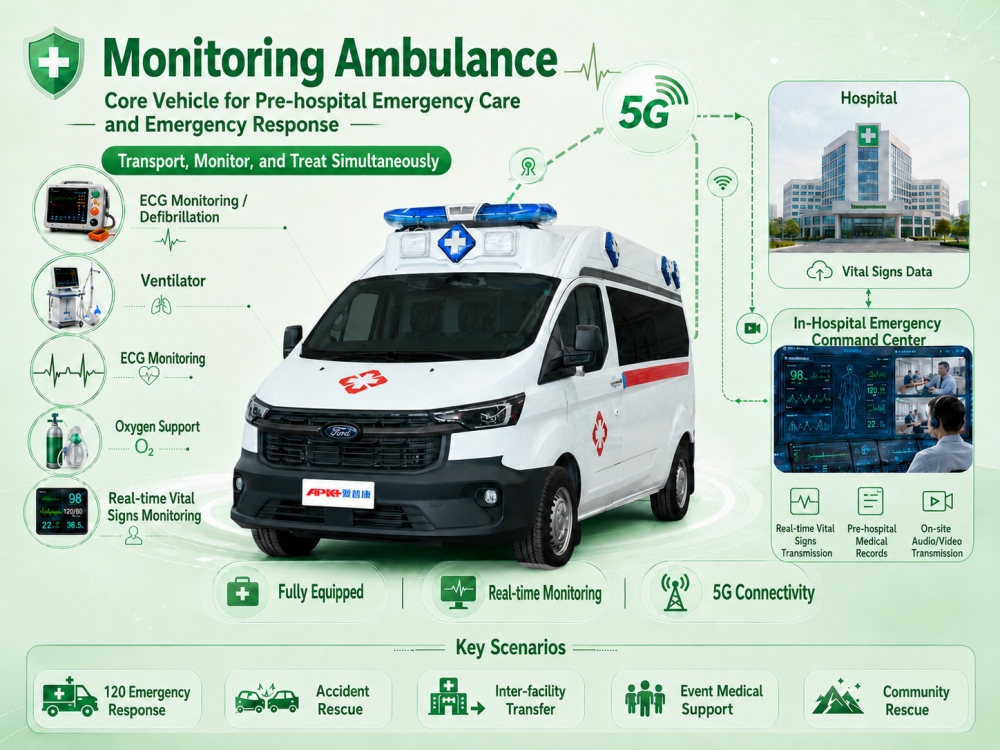
Intensive care ambulances serve as the standard workhorse for "120" emergency systems and hospitals at all levels. Their core capability lies in providing simultaneous transport, monitoring, and treatment; they are specifically designed for critically ill patients and casualties from sudden accidents.
Compared to transport ambulances, intensive care models feature significantly upgraded medical equipment, capable of carrying devices such as defibrillator-monitors, ventilators, and electrocardiogram (ECG) machines. During transport, they allow for real-time monitoring of vital signs—such as heart rate, blood pressure, and blood oxygen levels—and enable immediate clinical interventions like oxygen therapy, resuscitation, and life support.
Amid the trend toward digital emergency care upgrades, intensive care ambulances can be fitted with integrated 5G smart gateways. This enables the real-time transmission of vital sign data, pre-hospital medical records, and on-site audio/video feeds to the receiving hospital. This creates a seamless link between pre-hospital and in-hospital care, ensuring that patient information arrives before the patient does and that hospital-level care begins the moment the patient enters the ambulance. Key Use Cases:
◆ Routine "120" pre-hospital emergency calls and responses to sudden illnesses
◆ Emergency treatment for casualties from car accidents, mishaps, or trauma
◆ Long-distance inter-hospital transfer of critically ill patients
◆ Medical emergency support for large-scale sporting events and public gatherings
◆ Medical rescue support for emergencies at the primary care level
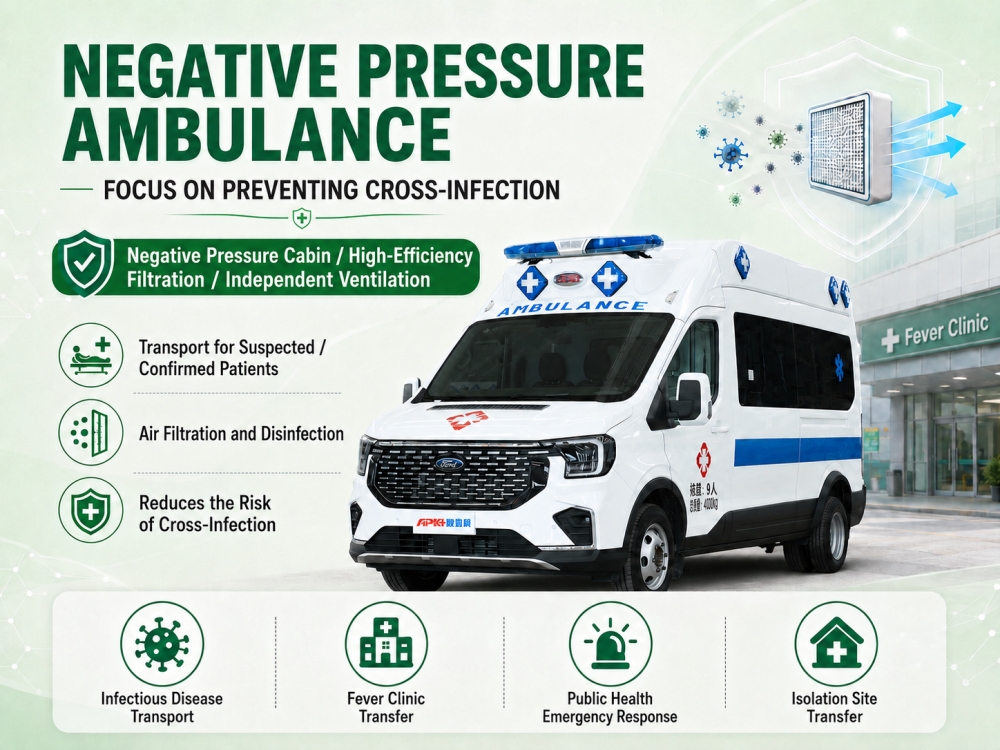
Negative-pressure ambulances are primarily used to transport patients with suspected or confirmed infectious diseases. Their core feature is a negative-pressure system that maintains lower air pressure inside the medical compartment compared to the outside. Air exhausted from the compartment undergoes filtration and disinfection to minimize the risk of cross-infection.
In addition to standard medical equipment, these ambulances are typically equipped with a negative-pressure system for the medical compartment, high-efficiency air filtration units, and independent ventilation systems.
Key Use Cases:
◆ Closed-loop transport of patients with confirmed or suspected respiratory infectious diseases
◆ Dedicated transport for individuals with suspected infections from fever clinics
◆ Emergency response to public health crises
◆ Dedicated transport of high-risk individuals from epidemic zones or quarantine sites
Different types of ambulances serve distinct purposes; selection should be based on a comprehensive assessment of the patient's condition, the operational scenario, medical equipment needs, and protection requirements.
Choose transport-type ambulances for routine primary care rounds, transporting rehabilitation patients, and standard inter-hospital transfers. Choose intensive care (monitoring) ambulances for acute emergencies, traffic accident rescues, inter-hospital transfers of critically ill patients, and medical support for large-scale events. Choose negative-pressure ambulances for transporting infectious disease patients, closed-loop transport of patients with fever, and responding to public health emergencies.
Each of the three vehicle types has its own specific role and specialization, collectively forming a standardized and systematic array of pre-hospital emergency equipment. As medical emergency systems continue to upgrade, the precise selection of suitable vehicle models, the provision of professional equipment, and the establishment of digital collaborative systems are crucial for enhancing pre-hospital treatment efficiency, ensuring safe transport, and strengthening primary-level emergency response capabilities. Sanling Group’s APK has long focused on the emergency medical services sector, creating integrated pre-hospital emergency solutions through the deep synergy of emergency transport vehicles and digital business systems. By driving upgrades toward visualization and collaboration in pre-hospital care, the company precisely addresses equipment gaps in primary healthcare and public health emergency response. It continuously empowers the development of comprehensive medical emergency systems, ensuring greater efficiency in every pre-hospital rescue and greater professionalism in every emergency response.

NEXT
