




Tel:
+86 15680081222
In emergency medical transport, not every patient can be moved in a standard vehicle with necessary equipment. Patients in critical condition require continuous monitoring, respiratory support, and advanced intervention throughout the journey. This is why the ICU ambulance has become an essential solution for hospitals, emergency service providers, and government procurement teams.
A modern mobile ICU ambulance is more than a transport vehicle. It is a highly specialized medical unit designed to deliver intensive care on the move. Accreditation bodies such as CAMTS are influential in shaping best practices for critical care transport. Their standards focus not only on the vehicle itself, but also on patient safety, crew qualifications, operational procedures, and quality management.
Manufacturers such as APK provide specialized ambulance manufacturing and customization services to help organizations build vehicles that meet demanding clinical requirements.
An ICU ambulance is a specially equipped ambulance built for transporting critically ill or high-risk patients who need advanced medical care during transit. Unlike a basic ambulance, it is designed to support intensive treatment and real-time monitoring from departure to arrival.
This type of ambulance is commonly used for inter-hospital transfer of unstable patients, emergency transport of patients requiring ventilation, cardiac and trauma patient transfer, long-distance critical care transport, and specialized neonatal or adult intensive care movement.
The main role of a mobile ICU ambulance is to ensure that the patient continues to receive life-supporting care without interruption. In many situations, that continuity can make a major difference in outcomes.
The strength of an ICU ambulance lies in its ability to combine transportation with advanced medical functionality. A professional ambulance ICU vehicle typically includes a multi-parameter patient monitor, ventilator, defibrillator, infusion pumps, suction device, oxygen supply system, emergency medicine storage, and transfer equipment.
Interior design is also critical. A well-planned cabin should provide sufficient working space for medical staff, easy access to life-saving equipment, safe storage systems, reliable lighting, and ergonomic placement of devices.
APK offers ICU ambulance units with customization and modification capability, allowing buyers to tailor internal layout, functional configuration, and exterior design to different operational scenarios.
The demand for ICU ambulance solutions continues to grow because modern healthcare systems often require critical patients to be moved between facilities for advanced treatment.
One major benefit of a mobile ICU ambulance is continuous care during transit. Monitoring, ventilation, oxygen therapy, and medication support can continue throughout the journey.
An ambulance ICU unit is necessary for patients with respiratory failure, severe trauma, cardiac instability, stroke-related complications, and post-operative risk. For these patients, transportation is not just movement from one location to another. It is a period of active medical management.
For hospitals and emergency service providers, ICU ambulances also improve operational capability. They support high-acuity missions, strengthen referral systems, and increase readiness for emergencies and disaster response.
When selecting an ICU ambulance, buyers should evaluate both the medical and engineering aspects of the vehicle.
Medical equipment should be integrated safely and logically so clinical teams can work efficiently. Customization is also important, since different institutions require different layouts and equipment configurations.
APK icu ambulances specializes in customizing special-purpose vehicles for medical institutions, government departments, and enterprise users.
Manufacturing quality is another key factor. APK states that its production is ISO 13485-certified, which is highly relevant for buyers focused on quality and safety standards.
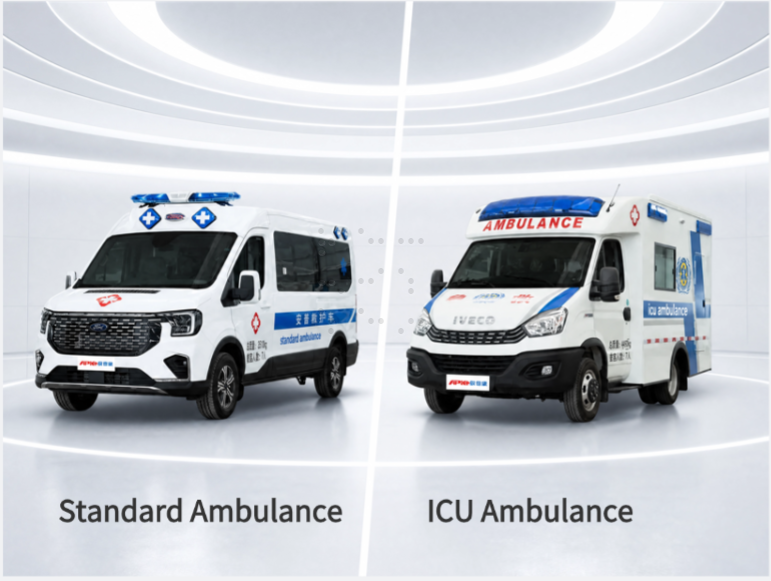
A normal ambulance is mainly used for basic emergency response and patient transfer. It usually carries essential first aid supplies and supports the transport of stable or moderately urgent patients.
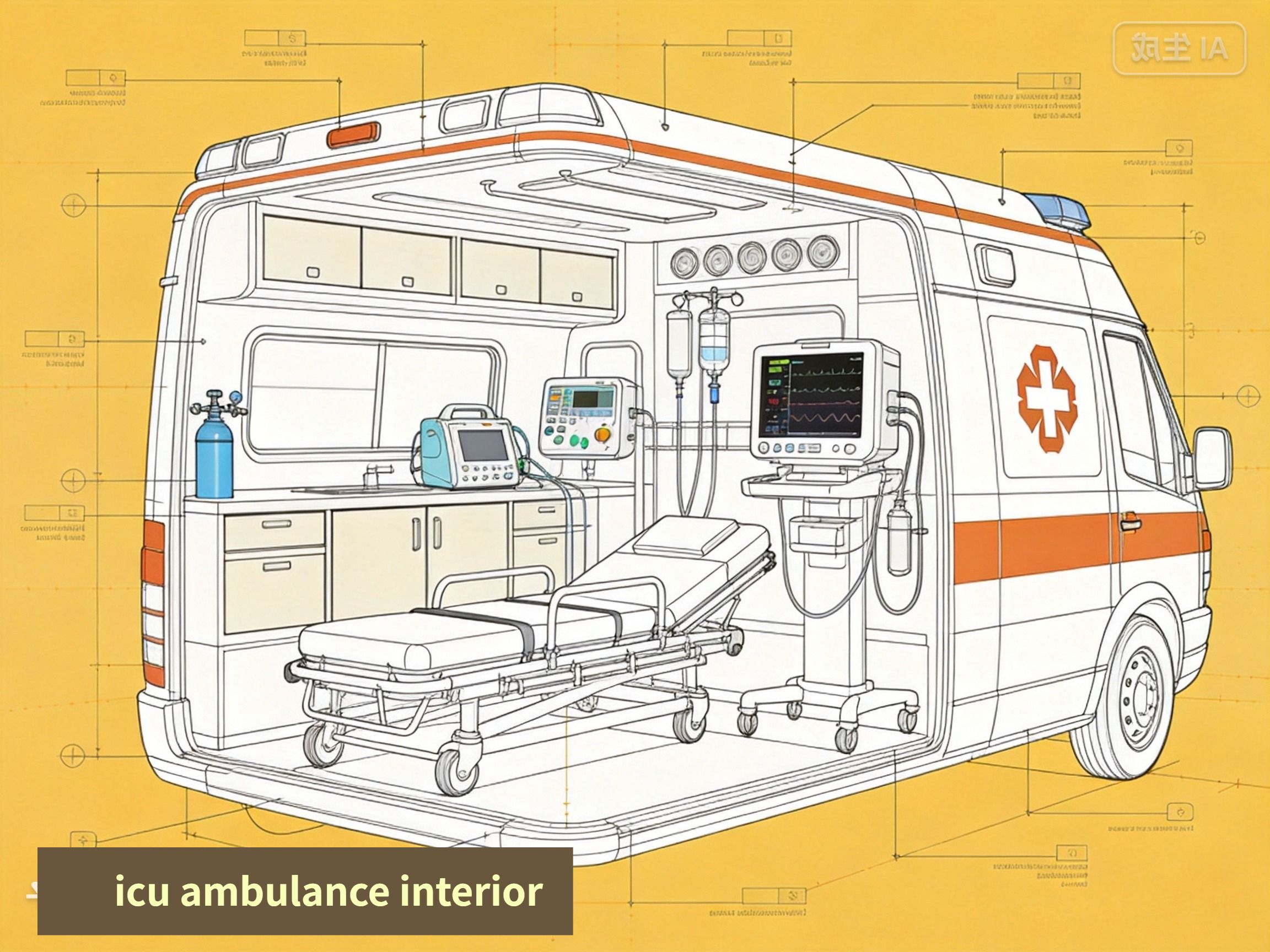
ICU Ambulances Interior
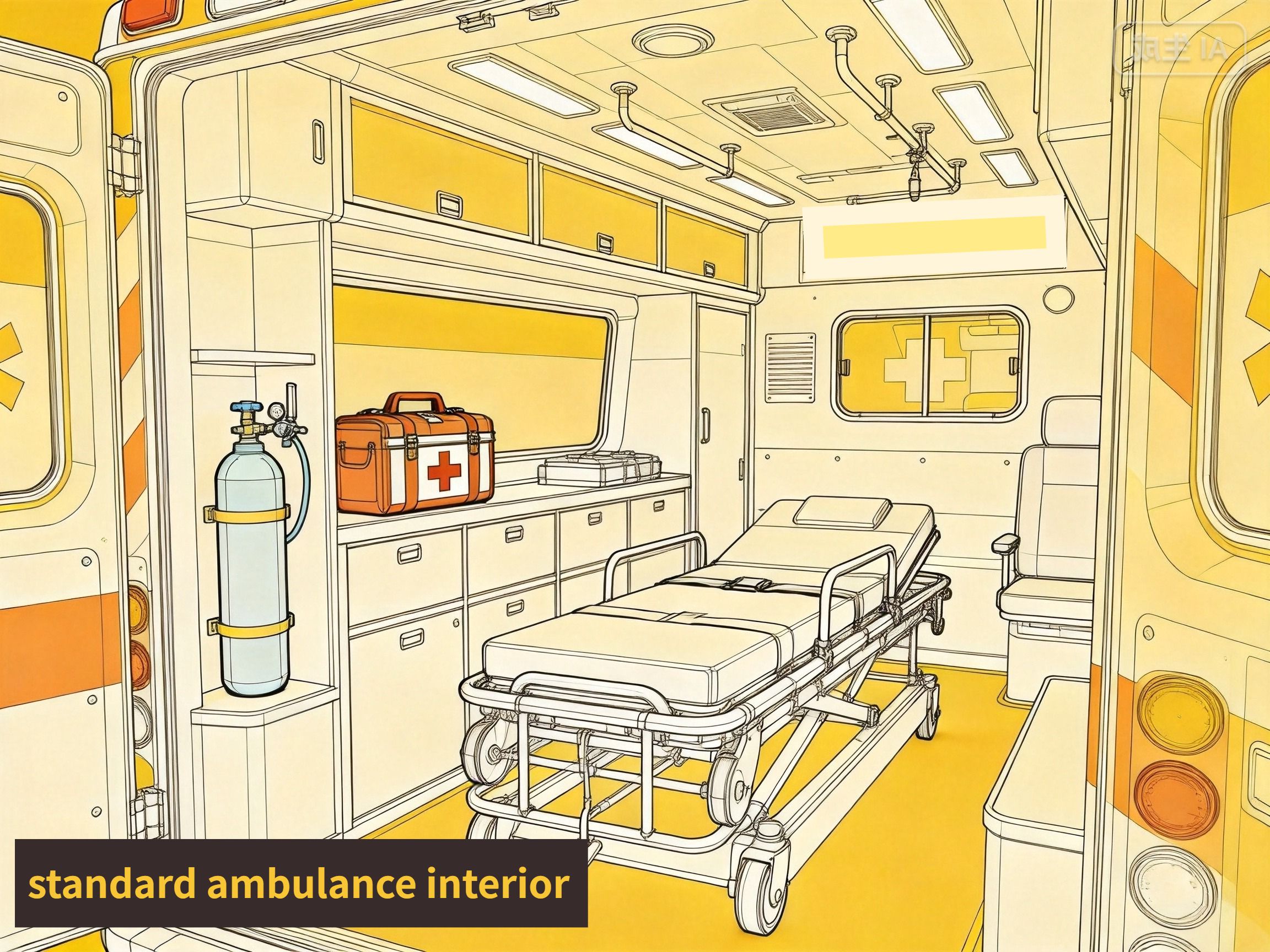
Standard Ambulance Interior
An ICU ambulance, by contrast, is designed for critically ill patients who need continuous observation and advanced treatment during transit. It serves as a mobile treatment unit rather than only a transport vehicle.
Comparison Item | Normal Ambulance | ICU Ambulance |
Primary Use | Basic emergency patient transport | Critical care patient transport |
Equipment Level | Equipped with standard emergency medical supplies | Fitted with professional ICU-grade medical devices |
Vital Sign Monitoring | Provide limited monitoring functions | Support continuous real-time vital sign monitoring |
Ventilator Support | Limited or no ventilator available | Equipped with essential ventilator support |
Interior Layout | Conventional compact space | Spacious layout for medical operation and equipment use |
Applicable Patients | Suitable for stable patients | For unstable and high-risk critical patients |
In simple terms, a normal ambulance transports the patient, while a mobile ICU ambulance transports the patient while sustaining intensive care.
A Step-by-step Guide
Step 1: Define needs: Clarify use cases and required ICU equipment (ventilators, defibrillators), complying with local standards (e.g., AIS 125, GB 7258).
Step 2: Set a budget covering upfront (chassis, medical modification), long-term costs and warranty.
Step 3: Customize chassis and medical cabin.
Step 4: Verify compliance, emissions and test equipment.
An ICU ambulance is one of the most important tools in critical care transport. It enables continuous treatment, advanced monitoring, and life-support capability during patient transfer. For hospitals, emergency medical services, and institutional buyers, a mobile ICU ambulance is a strategic investment in patient safety and medical readiness.
APK offer specialized solutions that align with these priorities, making them a strong option for organizations seeking a reliable ambulance ICU vehicle.