Tel:
+86 15680081222
Since the onset of the flood season, risks such as heavy rainfall, urban waterlogging, and flash floods have continued to rise. Facing complex and volatile disaster scenarios, achieving rapid response, efficient rescue operations, and sustained support has become a critical challenge in building modern emergency systems. At disaster sites, single pieces of equipment often fail to meet complex rescue needs; instead, the coordinated operation of various specialized vehicles is required to form a robust equipment support system for flood control and disaster relief.
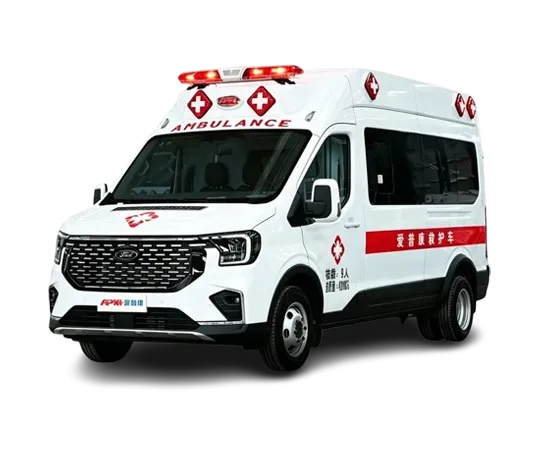
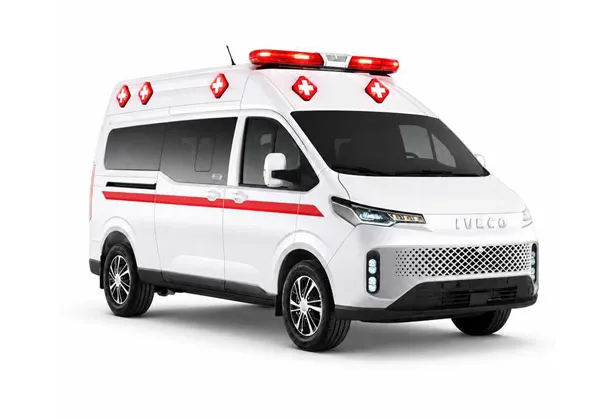
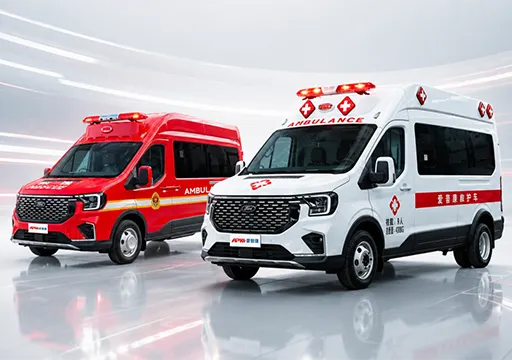
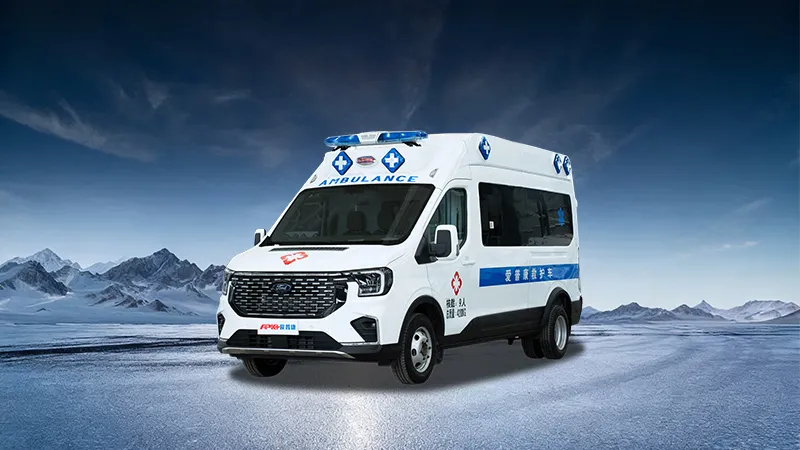
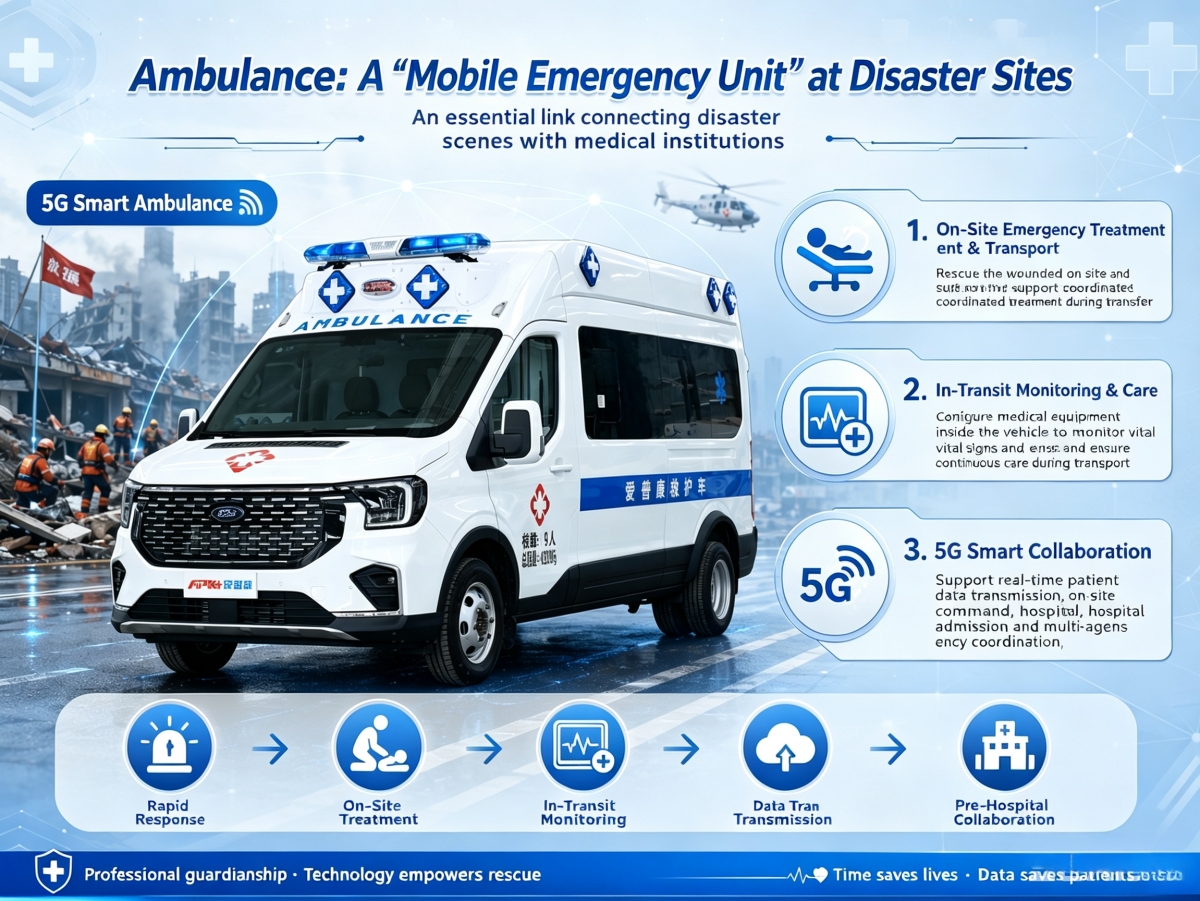
Treating the injured is a top priority following a disaster. As a vital link between the disaster site and medical facilities, ambulances not only transport the sick and injured but must also possess capabilities for on-site treatment and en-route care.
In complex disaster environments, obstacles such as blocked roads and difficult traffic conditions can hinder rescue efficiency. Specialized ambulances require high adaptability and must be equipped with medical systems—such as oxygen supplies and emergency care gear—tailored to mission requirements. Advanced life-support ambulances enable on-site treatment and en-route monitoring for critically ill or injured patients, buying precious time during transport.
With the evolution of "smart emergency care," 5G-enabled smart ambulances are further enhancing coordination between pre-hospital and in-hospital care. Integrated 5G smart gateway units facilitate medical data collection, the transmission of patient vital signs, the relay of on-site audio and video, and remote consultation support, driving the transition toward an emergency care model where "treatment begins the moment the patient boards the ambulance."
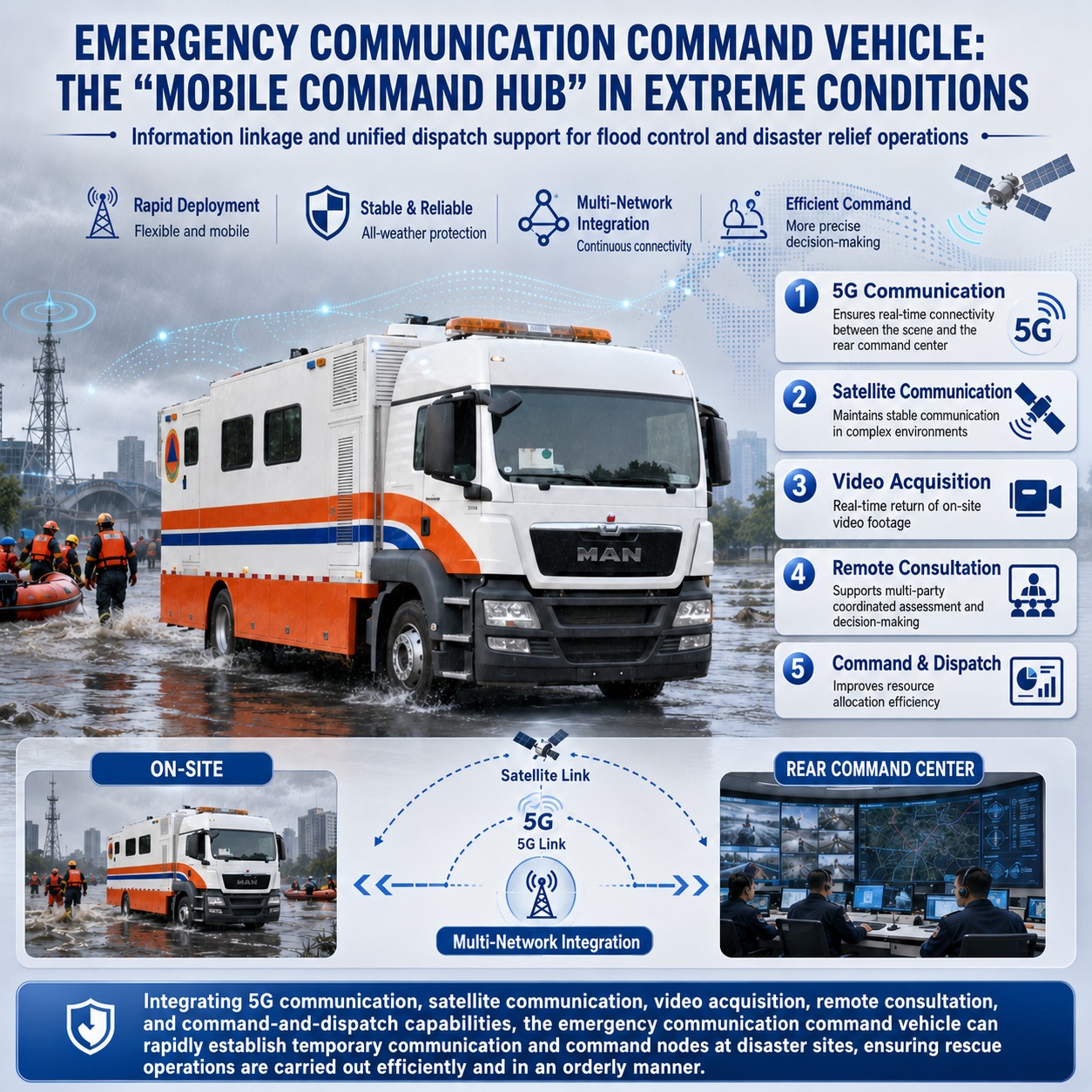
During flood control and disaster relief operations, the seamless flow of information is crucial to rescue efficiency. Disasters such as torrential rains and floods can cause blocked roads, communication outages, and power disruptions, creating challenges for information exchange between the disaster site and the rear command center, and making the timely, unified coordination of rescue forces difficult.
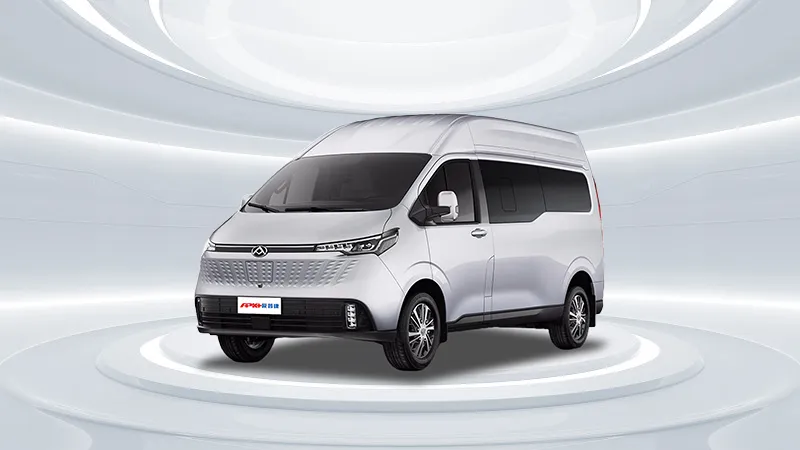
Emergency communication and command vehicles are the key equipment for overcoming this challenge. By integrating functions such as 5G and satellite communications, video capture, remote conferencing, and command dispatching, these vehicles can rapidly establish temporary communication and command nodes, linking the disaster site with the rear command center. By capturing real-time data—such as on-site visuals, personnel status, and resource requirements—commanders can more accurately dispatch tasks and allocate resources, significantly enhancing the efficiency of multi-agency coordinated rescue efforts.
In extreme environments, these vehicles serve not merely as carriers for data transmission, but as "mobile command hubs" that ensure rescue operations proceed in an orderly manner.
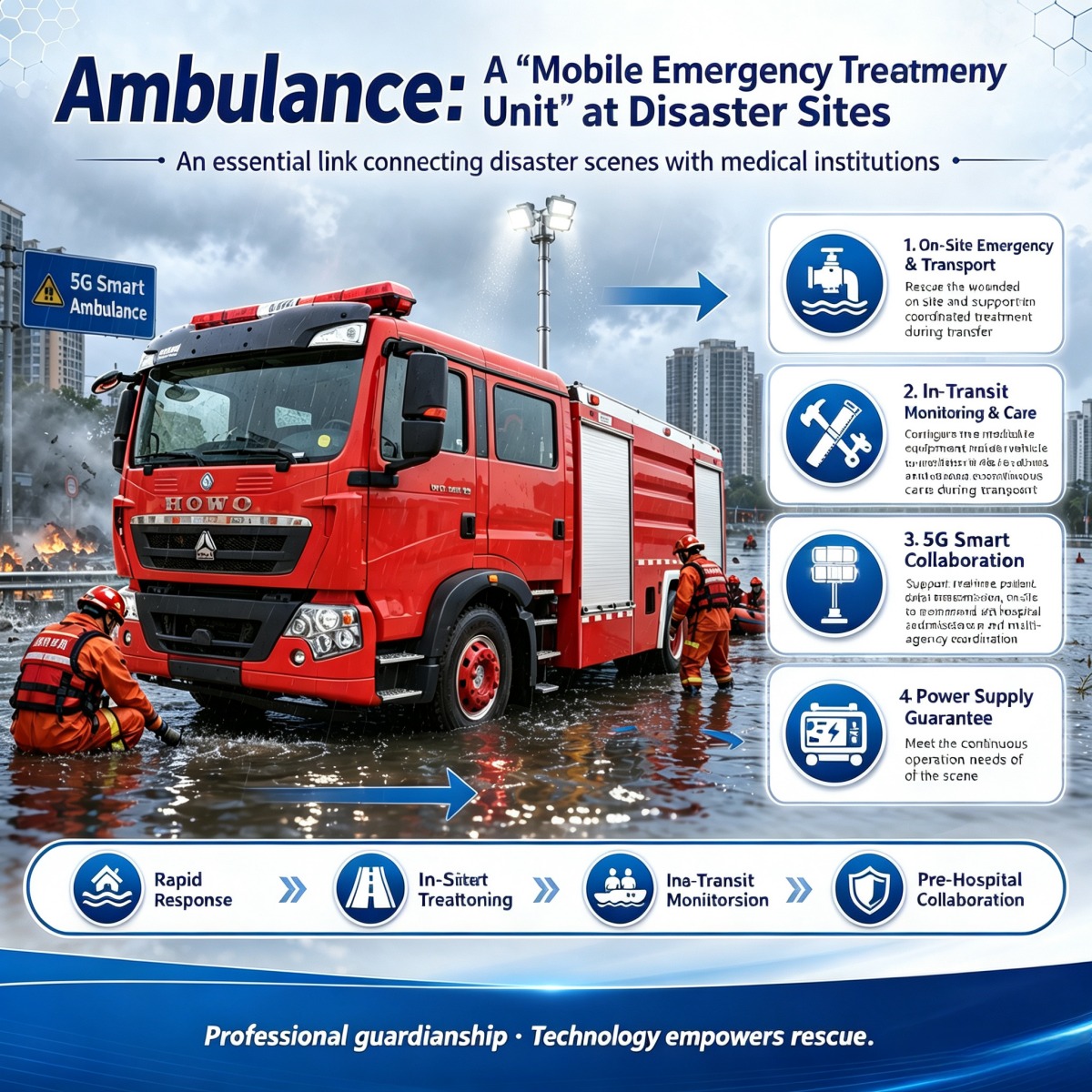
Flood control and disaster relief involve more than just rescuing people; they encompass various tasks such as emergency drainage, road clearance, and on-site operational support.
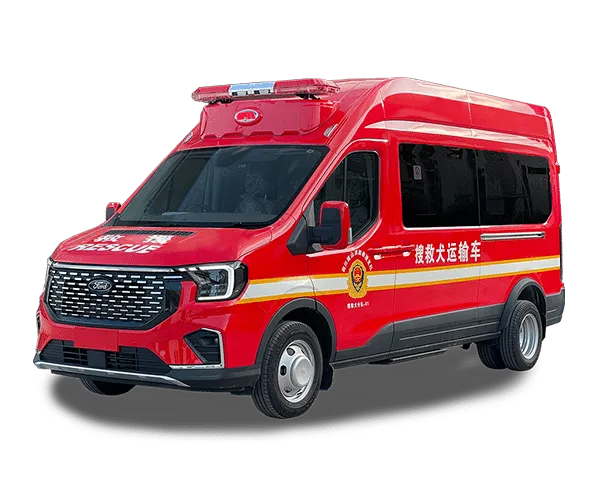
Equipped with specialized gear and capable of operating in complex environments, fire and rescue vehicles play a vital role in scenarios ranging from urban waterlogging and mountain flash floods to blocked roadways.
These vehicles often feature modular designs that allow for the configuration of specialized equipment—such as emergency drainage pumps, rescue tools, lighting systems, and power supply units—to meet the demands of on-site emergency response and sustained operations. From clearing floodwaters and evacuating personnel to conducting rescues and providing logistical support, specialized fire and rescue vehicles effectively boost the efficiency of disaster site operations and provide robust support for rescue missions.
Flood control and disaster relief constitute a systematic undertaking that requires both rapid response and efficient coordination. From ambulances ensuring life-saving medical care and communication vehicles facilitating seamless information flow to fire and rescue vehicles handling on-site emergency operations, various specialized vehicles work in concert throughout the disaster response process to build a comprehensive emergency support system.
In the face of disaster, speed means life, and coordination means efficiency. Sanling Group–Aipukang contributes to disaster prevention, mitigation, and relief efforts by providing specialized vehicles and integrated equipment solutions that enable faster emergency response and ensure more robust operational support.